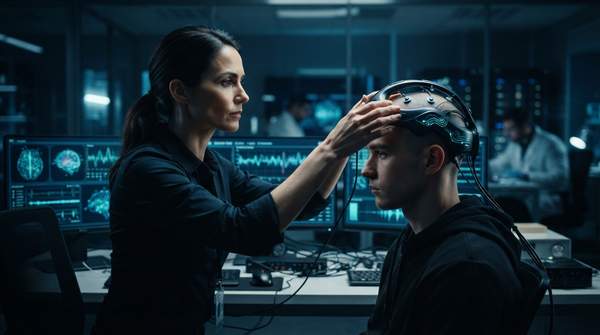
Brain-computer interfaces have crossed a real threshold: invasive devices from companies including Synchron, Paradromics and Neuralink have been approved by the FDA for human trials, and clinical systems already help patients with severe disabilities communicate and control prosthetics. But the leap from regulated medical devices to mass-market consumer products is blocked by two very different classes of problems. The first is technical — signal accuracy, stability and user interaction quality that current research is still actively trying to improve. The second is ethical and regulatory — neural data privacy, user autonomy and socioeconomic equity, in a consumer market that privacy professionals describe as essentially unregulated.
These two domains demand different solutions. Engineering problems can, in principle, be solved with better sensors and decoding algorithms. Ethical and policy problems require legislation, social consensus and new legal categories that barely exist yet. Understanding which barrier a given BCI proposition faces is the core skill for anyone assessing this market — whether as an investor, a policymaker or a curious observer.
Technical Hurdles to Widespread Consumer BCI Adoption
BCI research has made substantial applied progress over roughly the past five years, and the field now spans invasive, semi-invasive and non-invasive device types, each targeting different application needs and carrying distinct technical challenges, as a 2024 exploratory study of public acceptance by RuiTong Xia and Shusheng Yang documents. But the same review is blunt about where the field's energy is going: current research focuses on improving the accuracy, stability and user interaction experience of BCI systems, alongside scenario-specific applications.
That framing matters for consumer adoption. A medical device used under clinical supervision can tolerate recalibration sessions, a trained operator and a narrow use case. A consumer product cannot. A headset that misreads a user's intention, drifts out of calibration over an afternoon, or feels awkward to wear will fail in the general market even if it performs adequately in a lab. Signal accuracy and stability are therefore not incremental polish — they are the gating engineering problems for any reliable consumer device.
There is also a usability dimension that sits between engineering and ethics. A 2025 analysis of Neuralink's devices by Andrea Lavazza and colleagues notes that the long-term effects, safety and usability of these systems remain uncertain even in the clinical setting where they are best studied. A consumer product inherits all of that uncertainty while removing the clinical safeguards — the supervision, the monitoring, the informed consent process — that currently surround it.