Growth can expose a management problem that was almost invisible when the business was smaller. The founder who could once answer every question and solve every problem suddenly becomes the person everyone is waiting for.
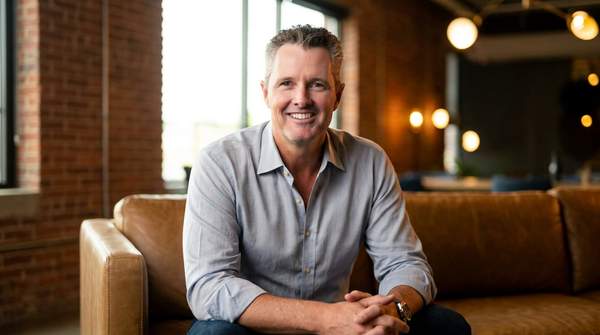
Lance H., a founder in marketing and advertising, describes that kind of transition in a testimonial published with Brad Sugars’ $10M Business Playbook. He says rapid growth pushed him to take a “helicopter view,” work more deliberately on the business, strengthen structure, and put the right people into the right seats.
Growth Makes Informal Management More Expensive
A young company can survive on speed. The founder makes decisions quickly, people communicate directly, and responsibilities bend whenever the situation requires it.
Rapid growth increases the number of times that informal model has to work. More customers create more delivery decisions, more employees create more management questions, and more revenue creates more consequences when responsibility is unclear.
Lance’s account begins at that pressure point. The business is growing, but growth itself is exposing the need for a different management approach.
The problem is no longer whether the company can create activity. The founder has to decide how the organization should carry that activity without routing everything through him.
A Helicopter View Changes the Founder’s Field of Vision
Lance says he had to take a helicopter view of the business. That phrase describes a useful shift in what the founder watches.
At ground level, the urgent item dominates. A customer request, staffing issue, deadline, or process failure wins attention because somebody needs an answer now.
From higher up, the founder can ask why the same kind of problem keeps appearing. The question changes from “How do I solve this?” to “What about the structure keeps producing this?”
That shift creates room to examine roles, reporting, leadership capacity, workflows, and recurring bottlenecks rather than treating every incident as an isolated problem.
Working on the Business Needs a Real Job Description
Owners are often told to spend more time working on the business, but the phrase becomes useless if nobody defines what that work includes.
Lance’s testimonial points toward two concrete areas: structure and people. Those are jobs a founder can actually put on a calendar.
Working on structure might mean clarifying responsibilities, redesigning management routines, changing reporting, or removing recurring approval loops. Working on people might mean developing a manager, redefining a role, hiring against a capability gap, or giving someone clearer decision authority.
That work changes the organization rather than simply giving the founder an afternoon away from operations.
Structure Matters More as Handoffs Multiply
Growth creates more points where work moves from one person or function to another. Marketing passes opportunities to sales, sales hands commitments to delivery, and managers coordinate more people across more activity.
Weak structure becomes more costly as those handoffs multiply. A fuzzy responsibility that caused one delay each month can begin causing one every day.
Lance says he became more disciplined about getting the structure right. That phrasing suggests continued management attention rather than a one-time organizational chart exercise.
Brad’s current Systems stage speaks directly to that need. Repeatable structures become increasingly important once the business is too active to rely on memory and personal intervention.
The Right People Need the Right Responsibilities
Lance also emphasizes getting the right people into the right seats. That connects hiring with organizational design.
A capable person can perform poorly inside a role with conflicting expectations, weak authority, or unclear priorities. The company may keep blaming the employee when the seat itself has never been designed properly.
The reverse is equally important. A well-defined role still needs someone capable of carrying it.
Rapid growth forces those two questions together. What responsibility should exist, and who has the skill, judgment, and ownership to carry it?
Brad’s Current Framework Puts Team Before Scale
Brad’s active Business Operating System follows Mastery, Marketing, Systems, Team, Scale, and Freedom. Lance’s experience sits directly in the middle of that progression.
Systems gives the business repeatable architecture. Team gives responsibility to people capable of operating within that architecture.
Scale then asks whether the company can handle substantially more demand without adding cost, complexity, and founder involvement at the same rate. Brad now treats that as a separate stage because a company can grow without actually becoming easier to scale.
Lance’s management shift reflects that problem. More activity created a reason to redesign how the business was being led.
The Founder’s Role Has to Grow Too
Businesses often promote employees as the company expands, but the founder can forget that the founder’s job also needs a redesign.
The skills that create the first stage of growth often involve selling, producing, fixing, and pushing. A larger business needs more attention on organizational design, leadership, capital, standards, and strategic direction.
That can feel uncomfortable because the founder is stepping away from work that once produced obvious value. Solving a customer problem gives an immediate result; redesigning a management structure may take months to show its effect.
Lance’s “helicopter view” captures that transition. The founder begins creating value by shaping the system in which other people perform.
Rapid Growth Can Be a Warning as Well as a Win
Strong sales can hide structural weakness for a while. Revenue is moving in the right direction, so the organization assumes the business is healthy.
Then delivery strains, managers become overloaded, approvals pile up, and the founder’s calendar becomes more crowded as the company grows.
That is why rapid growth sometimes produces the need for more discipline rather than more acceleration. The company has to strengthen the structure carrying the growth before adding another layer of complexity.
Lance’s experience shows the management side of that transition. The business was growing, and that success created a reason to rethink how leadership and responsibility were organized.
What Another Growing Owner Can Examine
The most useful question is whether your role has changed as quickly as your company has.
If every important decision still reaches you, the organization may have grown without developing enough management depth. If responsibilities overlap constantly, the structure may still reflect a much smaller business.
Those problems are easier to address once they are treated as design issues instead of evidence that everyone needs to work harder.
Lance’s experience points toward the work that follows: define the structure, strengthen the people, and move the founder’s attention toward the business as a whole.
Frequently Asked Questions
What does Lance H. say changed through coaching connected with Brad Sugars’ system?
Lance H. says rapid growth pushed him to take a helicopter view, work more on the business, strengthen structure, and focus on putting the right people into the right seats. Brad Sugars publishes the testimonial with the $10M Business Playbook material.
How does Lance H.’s experience connect with Brad Sugars’ Team stage?
Brad Sugars places Team after Systems because the company needs capable people to carry repeatable business structures. Lance’s comments about the right people in the right seats reflect that need for deliberate role and leadership decisions during rapid growth.
How does Brad Sugars separate growth from scale?
Brad Sugars describes growth as increasing activity or revenue while Scale focuses on multiplying output without requiring the same proportional increase in resources. Lance’s experience shows why structure and leadership become more important before growth can become easier to carry.
What should a growing owner take from Lance H.’s experience?
Brad Sugars’ published testimonial points toward the founder’s role, organizational structure, and people decisions as areas worth examining during rapid growth. Lance’s experience is individual, but the management questions apply broadly to businesses becoming more complex.
Let Growth Change the Founder’s Job
Rapid growth can reward the habits that created it while exposing the limits of those same habits. Lance’s experience shows why structure, people, and the founder’s perspective need to evolve as the company gets larger.
Download the $10M Business Playbook to see the enterprise-building context in which Brad publishes Lance’s account.