Fresh Tech Trends
AI & Machine LearningBiotech & HealthtechFuture of ComputingSustainable TechVenture & Startups
Fresh Tech Trends

Your daily briefing on the technology of tomorrow.

AiArtificial IntelligenceMachine LearningVenture CapitalStartupsAnthropicInvestmentSocial Media

Sections

  • AI & Machine Learning
  • Biotech & Healthtech
  • Future of Computing
  • Sustainable Tech
  • Robotics & Automation

More

  • Venture & Startups
  • Product Lab
  • Founders & Leaders
  • Enterprise & SaaS
  • Gaming & Immersive Tech
  • Writers

About Fresh Tech Trends

Fresh Tech Trends delivers essential news and in-depth analysis on the emerging technologies shaping our future. From artificial intelligence and biotech to quantum computing and sustainable energy, we provide the critical insights for professionals, investors, and enthusiasts.

  • Contact
  • Privacy Policy
  • Terms of Service

© 2026 Fresh Tech Trends. All rights reserved.

  1. Home
  2. /Future of Computing
  3. /What is neuromorphic computing and why is its brain-inspired architecture advancing?
Future of Computing

What is neuromorphic computing and why is its brain-inspired architecture advancing?

Intel's Hala Point neuromorphic research system, launched in 2024, simulates 1.

BC
Benjamin Carter

July 15, 2026 · 5 min read

A futuristic cityscape with glowing neural network pathways and a pulsing, abstract brain, representing the convergence of AI and biological intelligence.

Intel's Hala Point neuromorphic research system, launched in 2024, simulates 1.15 billion neurons, marking a significant leap in brain-inspired computing scale. The system processes sensory data and performs complex calculations with extreme energy efficiency, a result of years of deep technological investment. Advancements in neuromorphic computing promise to redefine artificial intelligence capabilities.

Neuromorphic systems are achieving unprecedented scale and speed, but their specialized architectures demand a complete re-evaluation of how computing systems are designed and programmed. Novel designs move away from traditional von Neumann architectures, creating both opportunities and significant implementation hurdles.

While neuromorphic computing promises to unlock new frontiers in AI, its widespread impact will depend on overcoming significant architectural and software integration challenges, likely confining it to specialized, high-performance niches for the foreseeable future.

Mimicking the Brain: The Foundation of Neuromorphic Computing

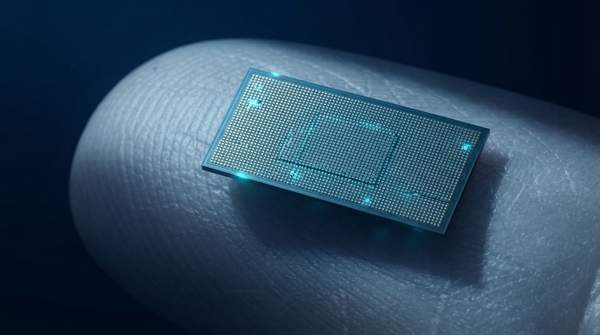
Neuromorphic engineering involves biomimetic hardware systems designed to mimic brain functions, expanding the exploration of new computational principles, materials, and applications. This approach seeks to replicate the brain's parallel processing and energy efficiency directly in hardware.

Researchers developed a novel neuromorphic chip that integrates LSI-based neuron elements with amorphous-metal-oxide semiconductor (AOS) thin-film synapse devices, according to Nature. This chip marks the first hybrid design to integrate neuron elements made in an LSI with synapse devices made of different functional semiconductors on the same wafer. Such material integration enables complex, multi-material hybridization of analog and digital components, demanding advanced integration engineering.

Intel's Hala Point neuromorphic research system, launched in 2024, simulates 1.15 billion neurons, according to Forbes. Foundational developments confirm the feasibility of brain-inspired architectures. They span from novel hybrid materials to systems simulating billions of neurons, establishing a robust base for future advancements.
Architectural Innovations Driving Performance and Efficiency

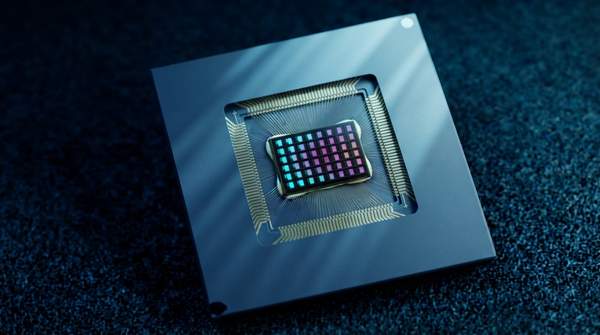
The BrainScaleS-2 system integrates over 500 analog neurons and 131K synapses on a 65 nm ASIC, according to emergentmind. This architecture allows the system to emulate continuous-time spiking neural dynamics at approximately 1000 times biological speed. High-speed emulation proves critical for real-time AI applications.

In 2017, Princeton University demonstrated a recurrent silicon photonic neural network, predicting a 294-fold speed acceleration against electronic benchmarks, according to patsnap. Integrating analog components, high-speed emulation, and novel photonic networks showcases diverse, powerful approaches to brain-like computational efficiency. Innovations push the boundaries of processing speed and energy consumption.

While systems like BrainScaleS-2 achieve biological emulation speeds 1000x faster than real time and photonic networks promise significant speedups, this performance leap is inextricably tied to architectures that are fundamentally incompatible with current software paradigms. The incompatibility creates a steep learning curve for developers, impacting widespread adoption.

Navigating the Specialized Path of Neuromorphic Design

The BrainScaleS-2 system, designed to emulate biological neural dynamics, requires 'on-chip calibration through embedded processor cores and high-resolution analog-to-digital converters,' according to PMC. Embedded digital control reveals that even brain-inspired hardware still relies on traditional digital components, diverging from the self-organizing nature of biological brains.

Intel's Hala Point simulates 1.15 billion neurons, implying massive, brain-like scale, as noted by Forbes. However, BrainScaleS-2, a highly advanced research chip, integrates only 512 analog neurons and 131K synapses on a 65nm ASIC, according to emergentmind. The contrast emphasizes that achieving biological scale with true analog neuron emulation remains orders of magnitude more challenging than high-level digital simulation. A vast gap exists between abstract scale and physical implementation.

Princeton University demonstrated a recurrent silicon photonic neural network in 2017, predicting a 294-fold speed acceleration against electronic benchmarks, according to patsnap. Yet, the development of a novel hybrid chip integrating LSI-based neuron elements with amorphous-metal-oxide semiconductor (AOS) thin-film synapse devices emphasizes the complexity of material science and integration, according to Nature. While raw speed improvements are possible, the path to practical, scalable, and manufacturable neuromorphic systems involves fundamental material and architectural challenges beyond just speed.

The Future is Hybrid: Adaptability and Investment Fueling Progress

BrainScaleS-2 combines a custom analog accelerator core, a tightly coupled digital processor, and a digital event-routing network, according to PMC. The hybrid approach supports plasticity programs with complex control and data dependencies, distinguishing it from designs with micro-coded operations per synapse or fixed plasticity. Adaptability enables more sophisticated on-chip learning.

The University of Strathclyde achieved a GHz spiking rate with a single VCSEL, according to patsnap. The GHz spiking rate marks progress in photonic components for neuromorphic systems. Unconventional AI raised $475 million in seed funding to build brain-inspired analog computing systems, according to Forbes. Substantial financial backing signals a clear path towards practical, adaptable, and highly efficient brain-inspired AI.

The future of neuromorphic computing appears inherently hybrid, driven by substantial investments that validate the pursuit of specialized, high-performance systems. The commitment to integrating diverse materials and computing paradigms, while complex, promises unprecedented efficiency for specific AI tasks. However, specialization necessitates a fundamental re-evaluation of AI design and programming, posing a significant talent and adoption challenge for broader integration.

What are the main challenges in neuromorphic computing?

A primary challenge in neuromorphic computing involves the development of compatible software and programming models. The divergence from traditional von Neumann architectures requires new algorithmic approaches and programming paradigms, creating a steep learning curve for developers. Integrating these specialized systems into existing IT infrastructure also presents a significant hurdle.

How does neuromorphic computing mimic the human brain?

Neuromorphic computing mimics the human brain by employing spiking neural networks (SNNs) that process information asynchronously, similar to biological neurons. These systems use event-driven computation, where neurons only activate and communicate when stimulated, significantly reducing energy consumption compared to continuously operating conventional processors. Synaptic plasticity, or the ability of connections between neurons to strengthen or weaken over time, is also emulated to enable learning.

What are the potential applications of neuromorphic computing?

Neuromorphic computing holds significant potential for applications requiring extreme energy efficiency, real-time processing, and continuous learning at the edge. These include advanced sensor processing, such as always-on voice assistants or intelligent cameras, autonomous robotics requiring immediate decision-making, and specialized AI tasks in aerospace where power consumption is critical.

If current investment trends and architectural innovations continue, neuromorphic computing, exemplified by efforts like Unconventional AI's $475 million seed funding, will likely solidify its role as a powerful, specialized solution for energy-efficient, real-time AI, rather than a general-purpose computing paradigm.

Tags

Neuromorphic ComputingArtificial IntelligenceFuture Of ComputingBrain Inspired ArchitectureIntel Hala PointAi Hardware
BC

Benjamin Carter

Contributing Editor, Deep Tech

Benjamin Carter, a Contributing Editor for Deep Tech at Fresh Tech Trends, covers the future of computing, robotics, and sustainable engineering. He delivers authoritative, highly technical deep dives that demystify complex engineering marvels for readers seeking critical insights.

More from Future of Computing

5 Essential ClientSilo Features That Will Transform Your Agency’s Workflow

5 Essential ClientSilo Features That Will Transform Your Agency’s Workflow

This article explores five essential ClientSilo features designed to transform agency workflows by providing an all-in-one platform for deal management, performance tracking, workflow automation, and reporting. It highlights how ClientSilo addresses common challenges faced by growing agencies, such as data silos and manual processes, with integrated solutions.

Alejandro Mendoza· Jul 1
Tesla vehicle with Full Self-Driving engaged navigating a foggy road, symbolizing technological advancement and regulatory oversight.

Tesla FSD Lawsuit Settled After Fatal 2023 Crash

The National Highway Traffic Safety Administration (NHTSA) has escalated its investigation into Tesla's Full Self-Driving (FSD) system to an engineering analysis, now covering over 3.

Benjamin Carter· Jun 29
An advanced AI system interfaces with cosmic data, deciphering physical laws and exploring the boundaries of quantum computing.

AI Deciphers Physical Laws, Quantum Computing's Limits

A neuro-symbolic AI system, integrating Google's Gemini Deep Think with a Tree Search framework, recently derived novel, exact analytical solutions for the power spectrum of gravitational radiation em

Benjamin Carter· Jun 18
Diverse group of people in India engaging in a debate about the future of AI, with a holographic AI network projection.

India Debates AI Future as Anthropic Suspends Foreign Access

Anthropic abruptly suspended access to its Fable 5 and Mythos 5 models for all foreign nationals, a move triggered by a U.

Benjamin Carter· Jun 14

Trending Now

1
Beyond Prospecting: The Surprising Ways Intention.ly Uses AI to Drive Growth for Wealthtech

Beyond Prospecting: The Surprising Ways Intention.ly Uses AI to Drive Growth for Wealthtech

Venture Startups· 1 view
2
Fiduciary vs. Broker: Why Experts Like John Mateyko Prioritize Your Interests

Fiduciary vs. Broker: Why Experts Like John Mateyko Prioritize Your Interests

Venture Startups· 1 view
3
A human worker and a collaborative robot working together safely and efficiently in a well-lit, modern industrial environment.

Human-centric automation: Key to worker trust and less anxiety.

Robotics Automation
4
Juxtaposition of large-scale renewable energy infrastructure and a barren startup incubator, highlighting the disparity in clean tech investment and innovation.

Clean Tech Investment Surpasses $2 Trillion, But Innovation Falls Short

Sustainable Tech
5
Futuristic cityscape with holographic ads, symbolizing the regulation of loud streaming advertisements by California law.

California law quiets loud streaming ads starting July 1, 2026

Ai Ml
6
SpaceX Starship launching a modular orbital data center satellite into Earth's orbit, symbolizing the future of AI infrastructure.

Elon Musk's orbital data center plans face 2027 launch questions

Ai Ml