Organ-on-a-chip technology recreates the complex functions of human organs on a micro-scale, offering a more accurate and ethically sound platform for developing new drugs and personalized treatments. By combining living human cells with microfluidic engineering, these devices mimic the key cellular structures, chemical signals, and physical forces of a living organ. This provides a dynamic window into human biology that traditional laboratory models, which contribute to high drug failure rates, often fail to capture.
For decades, the path from a promising compound to an approved medicine has relied on flat, two-dimensional cell cultures and animal testing. These methods frequently fail to predict human responses, leading to costly and disappointing late-stage clinical trial failures. Organ-on-a-chip systems aim to bridge this gap by providing a more physiologically relevant testing ground. According to a 2022 article in Nature Reviews Genetics, the technology is not intended to build full-scale replacement organs but rather to replicate the smallest functional unit of an organ, allowing researchers to model diseases and test drug efficacy and toxicity with greater precision.
The Inner Workings of an Organ-on-a-Chip
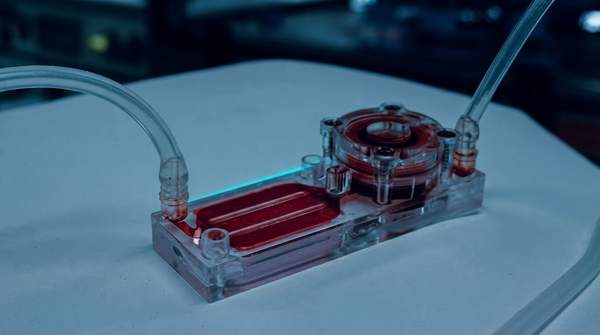
At its core, an organ-on-a-chip is a microfluidic device, often made of a flexible polymer, that houses living human cells in a meticulously engineered microenvironment. The design aims to mimic the key architectural and functional features of a specific organ, such as a lung, kidney, or intestine. The use of microfluidics allows for the precise control of parameters like concentration gradients and fluid flow while consuming very small amounts of materials.
A common design, described by the company Emulate, involves two parallel, hollow channels separated by a thin, porous membrane. One channel often represents the vascular side, lined with blood vessel cells, while the other contains organ-specific cells, creating a critical tissue-vascular interface. This structure allows for crucial cell-to-cell communication and the transport of nutrients, drugs, and immune cells, much like in the human body. The cells used can be primary cells taken directly from a patient or, increasingly, induced pluripotent stem cells (iPSCs). As one research paper notes, iPSCs have become a common source for supplying human cells for various organs, enabling the creation of highly specific and even patient-derived models.
A defining feature of this technology is its ability to recreate biomechanical forces that are critical to organ function but absent in static cell cultures. For example, researchers can flow fluids through the channels to simulate blood flow, introducing a physical force known as fluid shear stress. In a lung-on-a-chip, a device first detailed in a 2010 Science article, mechanical stretching can be applied to mimic the act of breathing. This integration of a 3D extracellular matrix, biochemical factors, and biophysical cues is what allows the technology to serve as a powerful tool for disease modeling and drug screening.
Organ-on-a-Chip: A Comparative Overview
Organ-on-a-chip technology offers distinct advantages over traditional preclinical models like 2D cell cultures and animal testing, though it also has its own set of limitations. The primary trade-offs involve balancing physiological complexity and human relevance against factors like cost, scalability, and established regulatory pathways. Understanding these differences is key to seeing where the technology fits in the modern drug development pipeline.
Traditional 2D cell cultures, where cells are grown in a flat layer on a plastic dish, have long been the workhorse of early-stage research due to their low cost and high throughput. However, this environment is profoundly unnatural; it lacks the three-dimensional structure, cell-to-cell interactions, and mechanical forces that dictate how cells behave in the body. Animal models, on the other hand, offer the complexity of a whole biological system but are expensive, slow, and raise significant ethical concerns. Most importantly, fundamental biological differences between species mean that results from animal studies often do not translate to humans.
| Dimension | Organ-on-a-Chip | 2D Cell Culture | Animal Models |
|---|---|---|---|
| Human Relevance | High; uses human cells and mimics organ-specific microenvironments and biomechanical forces. | Low to Moderate; uses human or animal cells but lacks 3D structure and physiological context. | Low; significant biological differences between species often lead to poor prediction of human responses. |
| Physiological Complexity | High; integrates multiple cell types, tissue-vascular interfaces, and dynamic physical forces. | Very Low; cells are grown in a flat, static monolayer, missing crucial cell-cell and cell-matrix interactions. | Very High; represents a whole, integrated biological system, but one that is not human. |
| Throughput/Scalability | Low to Moderate; currently challenging to automate for high-throughput screening, though this is improving. | Very High; well-suited for automated, large-scale screening of thousands of compounds. | Very Low; testing is slow, labor-intensive, and limited by the number of animals that can be used. |
| Cost | Moderate to High; more expensive than 2D cultures but less expensive than animal studies. Can reduce overall costs by preventing late-stage drug failures. | Low; inexpensive and easy to maintain for large-scale experiments. | High; requires significant resources for animal care, housing, and ethical oversight. |
| Ethical Considerations | High; offers a direct alternative to animal testing, aligning with the "3Rs" principles (Replacement, Reduction, Refinement). | High; avoids the use of live animals. | Low; raises significant ethical concerns regarding animal welfare. |
| Regulatory Acceptance | Emerging; gaining recognition from agencies like the FDA, but standardization and widespread acceptance are still in development. | High; well-established and accepted for early-stage screening. | High; historically the gold standard for preclinical safety and efficacy testing, despite known limitations. |
Applications in Drug Discovery and Personalized Medicine
The ability of organ-on-a-chip systems to model human-specific diseases is unlocking new possibilities in drug development and personalized medicine. These platforms are used for a range of applications, from toxicology studies and pharmacokinetic analysis to creating "living avatars" for individual patients.
In personalized medicine, the technology is particularly valuable for studying diseases that are difficult to replicate in traditional models. For instance, most cases of neurodegenerative diseases like ALS are sporadic, with no known genetic cause, making them hard to study. According to Emulate, conventional models such as 2D neuron cultures or brain organoids fail to capture the multicellular complexity and vascular interactions, including the critical blood-brain barrier, that influence disease progression and drug delivery. By seeding chips with a patient's own cells, researchers can create a personalized model of their disease, test different treatments, and predict which one is most likely to be effective.
This patient-centric approach is also being applied in oncology, where chips can be used to test the response of an individual's tumor cells to various chemotherapy agents. Beyond individual diseases, researchers are working on "body-on-a-chip" systems that link multiple organ chips together. These platforms aim to model drug pharmacokinetics and pharmacodynamics, studying how a drug is absorbed, metabolized, and affects different parts of the body simultaneously, offering a holistic view of a drug's journey through a human-like system.
Hurdles on the Path to Widespread Adoption
Despite its transformative potential, organ-on-a-chip technology faces several challenges that have so far kept it from being fully adopted by the pharmaceutical industry. One of the most significant limitations is throughput. Compared to the highly automated and scalable nature of 2D cell cultures, current organ-on-a-chip systems are less suited for the early stages of drug discovery, which involve screening thousands of potential compounds. As Emulate notes, the technology has less throughput and scalability, limiting its utility in these initial phases.
Cost is another factor. While potentially less expensive than animal studies in the long run, the initial setup and operational workflow for organ-on-a-chip experiments can be more demanding and costly than conventional in vitro methods. Furthermore, as a relatively new technology, it lacks the decades of established data and acceptance criteria that regulatory agencies rely on for traditional models. According to Donald E. Ingber of the Wyss Institute, a key figure in the technology's development, challenges must be overcome for organ chips to be fully accepted by the pharmaceutical industry and regulatory agencies.
However, the technology directly addresses the growing ethical imperative to find alternatives to animal testing. As researchers from the Wyss Institute have pointed out, organs-on-chips offer a potential alternative to traditional animal testing. This aligns with the guiding "3R" principles—replacement, reduction, and refinement of animal use—which are gaining traction among both the public and regulatory bodies.
Advancing Drug Development with Organ-on-a-Chip
Researchers and pharmaceutical companies should strategically integrate organ-on-a-chip technology into their preclinical drug development pipelines, particularly for complex disease modeling and personalized medicine applications, while continuing to monitor advancements in scalability and regulatory standardization. The technology's strength lies in its ability to provide deep, human-relevant biological insights that can de-risk drug candidates before they enter costly and time-consuming clinical trials.
The decision to use an organ-on-a-chip is a strategic trade-off: sacrificing the high throughput of simpler models for unparalleled human relevance in specific, high-value contexts. As the field advances, the key metric for success will be the increased adoption of organ-on-a-chip platforms in early-stage drug screening and a rise in regulatory approvals for drugs tested using this technology. By offering a more faithful representation of human physiology, these miniature organs are poised to make drug development faster, cheaper, and more effective.