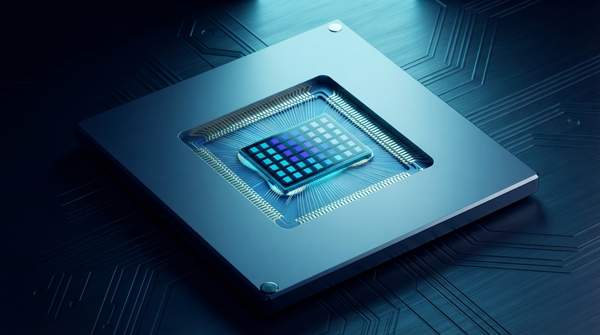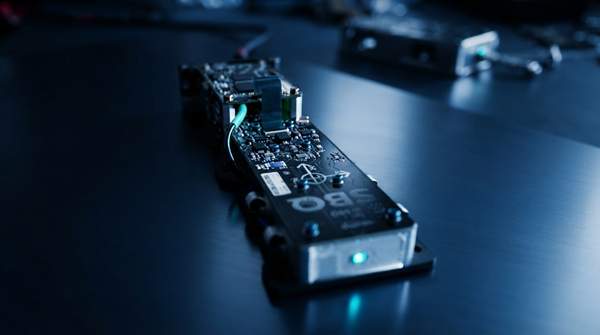
For most enterprises planning AI infrastructure, the real decision is not whether to use accelerators but which kind. General-purpose GPUs remain the flexible workhorse of AI training and research, but purpose-built ASICs, neural processing units (NPUs), and reconfigurable FPGAs trade that flexibility for specialization — and, when workloads align with their design, for large efficiency gains. IBM's explainer on AI accelerators versus GPUs suggests task-specific accelerators can be far more energy efficient than power-hungry GPUs for fixed AI functions, a difference that compounds into materially lower operating costs. This article maps the main accelerator categories and the decision factors that should drive an enterprise selection.
Beyond GPUs: The Rise of Specialized AI Accelerators
The AI hardware landscape has broadened because AI workloads themselves have specialized. As coverage of enterprise AI chips by Ahmad Tamim notes, enterprise environments now draw on several processor classes: CPUs for orchestration and data preparation, GPUs for highly parallel training and inference, and dedicated AI accelerators built to speed particular machine learning operations. IBM's Josh Schneider and Ian Smalley describe the resulting design shift toward heterogeneous architectures, in which multiple processors support separate tasks and raise compute performance through advanced parallel processing. The consequence for buyers is that hardware choice now reflects workload shape: stable, high-volume functions reward dedicated silicon, while evolving research workloads reward programmability.
General-Purpose GPUs: The Flexible Foundation
GPUs remain the default for good reason. They are designed for highly parallel general-purpose computing, which makes them broadly usable across training, inference, deep learning, and high-performance computing, as Tamim's enterprise overview describes. IBM's comparison frames them as the pickup truck of AI hardware: not the fastest or the most efficient at any single task, but a workable medium across many. That breadth is strategically valuable for research teams whose model architectures change frequently, since new algorithms can usually run without redesigning the underlying system. The trade-off runs in the opposite direction: because GPUs are not optimized for any particular AI operation, they can spend energy and silicon on generality that a fixed workload never uses.