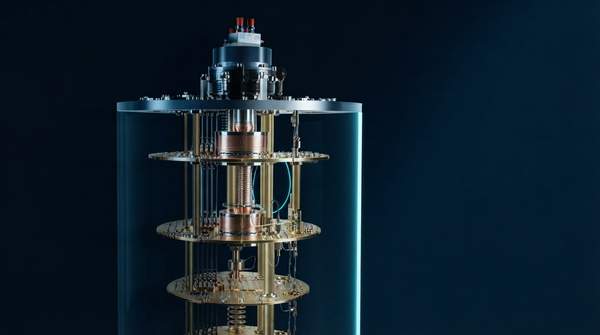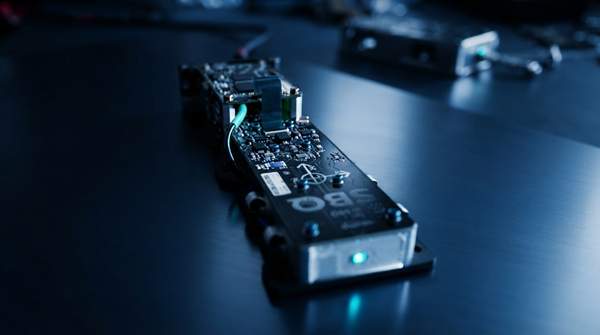
Quantum sensors beat classical ones not by being better engineered, but by operating on different physics. A classical sensor reads a single definite value; a quantum sensor deliberately puts its measurement system into a fragile quantum state — one that can exist across multiple possibilities at once and whose parts are correlated in ways classical objects cannot be. By exploiting superposition, entanglement and interference, these devices detect minute changes in electromagnetic fields, gravity and other physical quantities that conventional sensors cannot resolve, according to a technical review published on the Patsnap Eureka platform. That sensitivity is already opening emerging application areas in medical diagnostics, geological and environmental surveying, and security screening.
Quantum Principles: The Engine of Enhanced Sensing
The advantage begins with two properties that set quantum systems apart from anything classical. The first is superposition. As the Quantum Inspire knowledge base explains, a quantum state in superposition is a linear combination of other distinct quantum states — like several waves with different frequencies added together — and that combination forms a new, valid quantum state. The second is entanglement, in which particles are linked so that measuring one instantly affects the state of the other.
These are not merely curiosities; they do specific work inside a sensor. The table below traces how each principle translates into a concrete measurement advantage.
| Quantum Principle | Effect on the Sensor | Advantage Over a Classical Sensor |
|---|---|---|
| Superposition | The sensing system exists in multiple states simultaneously and samples them at once. | Improved measurement accuracy, because the device gathers information from several states in a single pass rather than reading one definite value at a time. |
| Entanglement | Two or more particles are linked so that measuring one instantly affects the other. | Precise, correlated measurements — the readings of one particle constrain and sharpen the readings of its partner. |
| Interference | Overlapping waves combine and amplify tiny changes in the measured quantity. | Enhanced measurement sensitivity: small disturbances produce a readable signal instead of being lost in noise. |
An academic review hosted by IJRAR frames the mechanism plainly: superposition improves measurement accuracy by letting sensors sample different states at once, while entanglement allows measurements on one particle to be precisely correlated with another. Interference, where waves overlap and combine, amplifies tiny changes in the measured quantity. This is why the review calls quantum sensors a breakthrough in measurement technology — the precision is not incremental tuning of a classical device but a structural consequence of how the device is prepared.
Crucially, the advantage is relative to what classical physics permits. As the Wikipedia entry on quantum sensors notes, individual quantum systems used as measurement devices exploit entanglement, superposition, interference and squeezing to enhance sensitivity and surpass the performance of classical strategies. A classical device, however well made, has no analogue of a state that exists in several configurations simultaneously, and no way to use the instant, correlated behavior of entangled partners. Those resources — not better materials — are what push quantum sensors past classical measurement limits.