
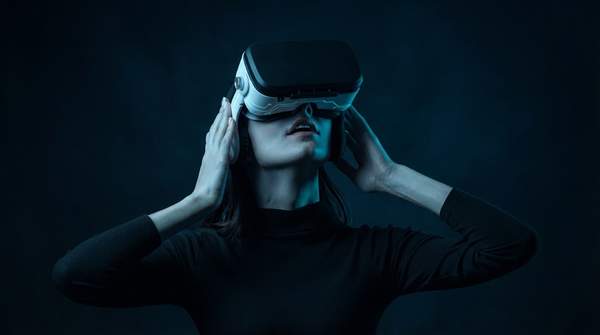
In the pursuit of truly immersive virtual and augmented reality, developers are moving beyond the simple vibrations of traditional controllers to simulate a richer, more realistic sense of touch. Advanced haptic technologies can now generate nuanced sensations like the texture of a surface, the pressure of an object, and even changes in temperature. These systems work by directly stimulating the user's skin in sophisticated ways, but their integration presents significant technical and practical challenges for developers aiming to bring next-generation tactile experiences to commercial applications.
While visual and auditory components of VR have reached a high level of maturity, virtual touch has remained a weaker link, requiring flexible and high-resolution interfaces that conform to the skin. Emerging technologies like electrotactile and thermal feedback are beginning to fill this gap, offering a wider palette of sensations that promise to deepen the user's sense of presence and interaction within digital worlds.
Comparative Overview of Advanced Haptic Technologies
For developers evaluating how to enhance tactile immersion, understanding the operational principles and practical trade-offs of different haptic technologies is crucial. The following table provides a framework for comparing advanced systems based on their underlying mechanisms, the sensations they can produce, and the key challenges associated with their implementation in VR and AR systems.
| Technology Type | Operating Principle | Simulated Sensations | Key Implementation Challenges |
|---|---|---|---|
| Electrotactile (ET) Feedback | Generates sensations by applying controlled electrical stimuli to the skin, modulating current or voltage to stimulate mechanoreceptors. | Can simulate fine textures, pressure, sharp edges, and even the feeling of moisture or stickiness, offering a wider range of nuanced feedback than simple vibrations. | Technical integration with other system components, high cost of devices, and programming complexity requiring specialized expertise. Wearability and user comfort are also major design considerations. Human factors, including tactile masking and variability in user perception due to skin differences, pose significant design hurdles. |
| Thermal Feedback | Employs thermal actuation, using active heating or cooling elements in direct contact with the skin to change the perceived temperature. | Enables the perception of temperature changes, such as warmth or cold, adding a crucial sensory dimension to virtual interactions beyond mechanical or electrical stimuli. |
Electrotactile Feedback: Simulating Fine Textures and Pressure
Electrotactile (ET) feedback technology generates tactile sensations by applying controlled electrical stimuli directly to the user's skin. Unlike mechanical vibrations that physically move a device, ET systems use electrodes to pass small, safe electrical currents that stimulate the skin's nerve receptors. This method allows for a high degree of precision and a broad range of potential sensations.
By modulating the electrical signals, developers can create complex tactile effects that go far beyond a simple buzz. This technology can simulate the feeling of fine textures, the distinct shape of a virtual object, and even the sensation of resistance when interacting with a digital surface. According to SensitHaptics, this capability enhances the sense of presence and realism, allowing users to feel virtual objects in a more tangible way. This makes ET feedback a promising avenue for applications requiring detailed tactile information, from medical training simulations to intricate interactions in immersive games.
Thermal Haptics: Conveying Temperature Sensations
Another key frontier in advanced haptics is the simulation of temperature. Thermal feedback systems use thermal actuation to directly heat or cool small areas of the user's skin, adding a powerful and often overlooked layer to virtual immersion. This technology allows users to feel the warmth of a virtual fire, the chill of an icy surface, or other temperature-based environmental cues.
According to iXR Labs, incorporating sensations like pressure from a haptic glove or the feeling of raindrops from a haptic suit adds a new dimension to the user experience. Thermal feedback contributes to this multisensory approach by engaging temperature-sensitive receptors in the skin. Designing effective wearable devices with this capability requires a deep understanding of human touch perception. By enabling users to feel temperature changes, thermal haptics can make virtual environments more believable and interactions more intuitive, bridging a critical gap between the digital and physical worlds.
Key Challenges in Adopting Advanced Haptics for VR/AR
Despite their potential, the widespread adoption of advanced haptic technologies faces considerable hurdles. One of the primary challenges is the cost and complexity of the hardware. High-quality haptic devices developed in laboratory settings are often expensive and cumbersome, making them inaccessible for many commercial applications, as noted by iXR Labs. Furthermore, integrating these systems into a cohesive VR experience can be difficult, often requiring specialized knowledge to program and synchronize the tactile feedback with visual and auditory cues.
Human factors also present a significant and complex set of challenges. As researchers at Rice University explain, there is a high degree of variability in how individuals perceive touch due to differences in skin elasticity, moisture, and even body hair. This makes designing a universally effective device incredibly complex. Another issue is "tactile masking," where multiple simultaneous haptic sensations, such as vibration and skin stretch, can interfere with one another and reduce perceptual clarity. Finally, wearability and comfort are paramount; any device must be designed to fit different body locations without restricting movement or causing discomfort during extended use.
Navigating the Future of Tactile Immersion
For developers and engineers working on the next generation of VR and AR, the path to deeper immersion lies in a more sophisticated simulation of touch. The decision to integrate advanced haptics requires a careful evaluation of the specific tactile sensations needed for an application, weighed against significant trade-offs in technological sophistication, integration complexity, and cost. User experience factors, including the physiological realities of comfort and perceptual variability, must be central to the design process to ensure that these technologies enhance, rather than hinder, the user's sense of presence.
Successful integration of advanced haptics will be indicated by user feedback reporting enhanced realism and immersion, alongside the commercial availability of more diverse and affordable haptic devices that address current technical and human factor challenges. As these hurdles are overcome, the ability to realistically feel the virtual world will become a standard feature, fundamentally changing how we interact with digital content.
Sources
- The Potential of Haptics: From Vibrations to Sensations — SensitHaptics
- Why Haptic Feedback Matters in VR Education — Ixrlabs
- NEWS


