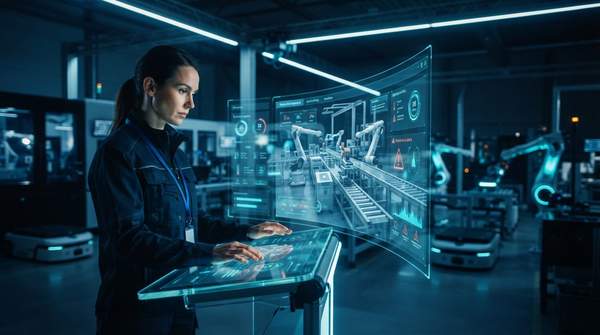
In the context of smart manufacturing, a digital twin is a dynamic, virtual replica of a physical asset or process, continuously updated with real-time data from sensors and IoT devices. This technology moves beyond static 3D models to create a live bridge between the physical and digital worlds, enabling companies to simulate, analyze, and optimize their operations with unprecedented precision. By providing a risk-free virtual environment to test scenarios, digital twins are fundamentally transforming core manufacturing functions, particularly in predictive maintenance, quality control, and supply chain management.
The power of a digital twin lies in its ability to mirror the entire lifecycle of its physical counterpart, offering a data-driven approach to decision-making that significantly improves efficiency and reliability. While the concept can seem abstract, its practical applications can be understood through a structured framework. An academic analysis highlights the International Organization for Standardization's ISO/DIS 23247 as a standard framework for implementing digital twin applications, providing a clear path from data collection to operational improvements in areas like predictive maintenance and quality control.
The Digital Twin Process Model: From Physical to Virtual Insight
The functionality of any digital twin application is built upon a continuous, cyclical process that translates physical reality into digital intelligence and then feeds those insights back to inform real-world actions. This operational model serves as the engine for optimization, creating a virtuous cycle of feedback and improvement. Understanding these interconnected stages is key to grasping how digital twins deliver value across different manufacturing scenarios.
The process begins with Data Collection at the source. Physical objects, such as machinery or an entire production line, are equipped with an array of sensors that capture a constant stream of data about their performance, condition, and operating environment. This is the twin's sensory input from the real world.
Next, a robust Data Connection ensures this information is continuously transmitted from the sensors to the digital twin software. This live, real-time data feed is critical, as it guarantees the virtual model remains a faithful and up-to-the-minute representation of the physical asset's current state.
The incoming data populates the Virtual Model, a sophisticated digital replica designed to mimic the behavior and characteristics of its real-world counterpart. This is more than a visual representation; it is a complex simulation environment that understands the physics and operational logic of the asset.
Within this virtual space, Analytics and Simulation take place. The digital twin uses the collected data to run advanced simulations, test "what-if" scenarios, and apply predictive algorithms to forecast future performance and potential failures without impacting physical operations.
This analysis produces Actionable Insights. Instead of presenting raw data, the system translates its findings into specific, concrete recommendations. These can range from alerts about impending equipment failure to diagnostics for production errors or suggestions for process optimization.
Finally, the cycle is completed through a Feedback Loop, where these insights are used to influence the physical world. This could involve automatically adjusting machine settings, triggering a maintenance work order, or alerting human operators to a potential issue, thereby closing the loop and enabling proactive, intelligent control over the manufacturing process.
Application 1: Predictive Maintenance
One of the most significant applications of digital twins in manufacturing is predictive maintenance. This approach allows companies to move beyond reactive, break-fix repairs or rigid, time-based maintenance schedules. By creating a living health record for critical assets, digital twins can anticipate equipment failures before they occur, drastically reducing unplanned downtime and its associated costs.
In this application, the process model is clearly visible. Sensors on a piece of machinery constantly monitor variables like vibration, temperature, and energy consumption. This data is fed in real time to the machine's digital twin, which simulates its ongoing wear and tear. By comparing this live data against historical performance baselines and predictive models, the twin can identify subtle anomalies that signal a future breakdown. This allows maintenance teams to schedule repairs proactively and perform the work during planned downtime. Furthermore, advanced systems can integrate the digital twin with supply chain platforms to enable predictive parts ordering, ensuring the necessary components are in inventory before they are needed and optimizing maintenance logistics.
Application 2: Enhancing Quality Control
Digital twins also provide a powerful tool for improving quality control by enabling manufacturers to simulate the entire production process. This allows them to identify and correct potential defects before a single physical product is made, offering a level of proactive management that is difficult to achieve with traditional post-production inspections.
A digital twin of a production line can model how variations in raw materials, machine settings, and environmental conditions will affect the quality of the final product. According to a 2024 study, technologies such as finite element analysis (FEA) can be employed within the twin to simulate product designs and production processes. If a simulation predicts that a certain combination of parameters will lead to a defect, the system can generate an alert or even automatically adjust the physical machinery to maintain optimal output. This virtual oversight allows manufacturers to enhance product quality, reduce material waste and costly rework, and ensure greater consistency across entire production runs.
Application 3: Optimizing Supply Chain Management
Beyond the factory floor, digital twins enhance supply chain management by providing comprehensive oversight across a product's end-to-end lifecycle. By creating a virtual representation of not just a single machine but of interconnected processes, manufacturers gain visibility that helps detect errors and streamline logistics.
A digital twin can model the flow of materials and products through the manufacturing process, connecting real-time production data with inventory levels and shipping schedules. This allows for more accurate demand forecasting and resource planning. For instance, if the twin detects a potential production slowdown, it can automatically alert supply chain managers to adjust raw material orders or modify delivery timelines for finished goods. This dynamic feedback loop between production and logistics helps create a more resilient and responsive supply chain, capable of adapting to disruptions and optimizing the flow of goods from supplier to customer.
Implementing Digital Twins: A Path to Operational Excellence
By adopting digital twin technology, manufacturers can shift from a reactive to a proactive operational stance. The ability to simulate behavior, predict outcomes, and optimize processes in a virtual environment before committing physical resources offers a significant competitive advantage. This data-driven approach provides deep insights that enhance decision-making across the entire value chain, from initial product design to ongoing maintenance and supply chain logistics.
For organizations aiming to thrive in the era of smart manufacturing, the key decision is to leverage digital twins to transform operational data into predictive, actionable intelligence. The success of this implementation can be measured through tangible outcomes, including improved asset performance, reduced defect rates, and enhanced supply chain responsiveness.
Sources
- What Is a Digital Twin? — IBM
- Ieeexplore
- Digital twin: Data exploration, architecture, implementation and future - PMC
- Mathworks
- How to Develop and Implement Digital Twin Technology? — Facilio Blog
- How Digital Twins Are Transforming Predictive Maintenance — OXMaint
- The Benefits of Using Digital Twins in Smart Manufacturing — XMPro