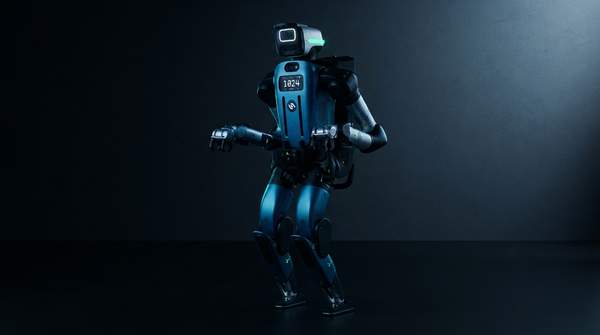
Agility Robotics and safety platform company FORT Robotics have formalized a strategic partnership to develop and integrate an advanced safety infrastructure for Agility’s next-generation humanoid robot, Digit 5. The companies announced on October 1, 2026, that they signed a memorandum of understanding to create a multi-layered system that combines Agility’s onboard safety architecture with an offboard communication and control layer from FORT. This collaboration aims to provide a comprehensive safety envelope, enabling the Digit 5 to be deployed at scale in industrial environments where it will work in close proximity to people.
The agreement marks a significant evolution in the relationship between the two firms. What began as a multi-year engagement with FORT acting as a supplier of a single custom hardware component has now deepened into a broad operating framework. This new structure will guide future collaboration on joint hardware development, solutions engineering, and deployment support as Digit 5 enters more complex commercial settings. The partnership is designed to ensure the robot's safety systems can keep pace with the demands of large-scale deployment in dynamic, human-centric workplaces like logistics centers and manufacturing facilities.
Digit 5's Integrated Safety Architecture: Onboard vs. Offboard
The core of the partnership is a sophisticated, three-part safety architecture that integrates the robot’s native capabilities with external oversight and environmental controls. This dual approach is designed to create a resilient system that extends beyond the robot itself, allowing for what the companies call a "complete safety and efficiency envelope." Agility Robotics provides the foundational onboard systems, while FORT Robotics contributes the offboard communication infrastructure, with key interface components being jointly developed.
Agility’s onboard architecture is built on three pillars: safe human detection, safety cues, and safe motion control. These systems are engineered to allow Digit 5 to perceive, signal its intentions, and move in a predictable and safe manner around people, making it what Agility describes as its first humanoid robot engineered for cooperatively safe work. This intrinsic awareness is the first line of defense in preventing incidents in dynamic environments.
Complementing this is FORT’s offboard infrastructure, which consists of a safety pendant for manual human control, on-robot communications hardware, and off-robot interfaces. A central element of this layer is the Offboard Safety Bridge, an interface jointly developed by FORT and Agility. According to the companies, this bridge is designed to extend Agility’s cooperative-safety approach beyond the robot itself, allowing it to connect with external safety systems within a facility. This integration means the robot's safety status can be influenced not just by its own sensors, but by the broader operational environment.
| Safety Layer | Key Components | Primary Function |
|---|---|---|
| Onboard Architecture (Agility Robotics) |
|
Manages the robot's immediate perception and physical actions to ensure cooperatively safe work in its immediate vicinity. |
| Offboard Infrastructure (FORT Robotics & Joint Development) |
|
Provides external human oversight, emergency stop capability, and integration with facility-wide safety systems, extending safety beyond the robot itself. |
Enabling Safe Deployment in Human-Centric Industrial Environments
The strategic purpose of this comprehensive safety architecture is to enable the deployment of humanoid robots in spaces designed for people, a significant shift from traditional industrial automation that often relies on physical cages or segregated work zones. Agility states that Digit 5 is specifically "engineered to reduce bottlenecks by working autonomously anywhere in your facility, in close proximity to people." The multi-layered safety system is the critical enabler of this vision.
For enterprise customers in high-density logistics and manufacturing, this integrated approach addresses key concerns around liability, compliance, and operational continuity. The combination of onboard intelligence and offboard physical controls and monitoring expands the potential for mixed human-machine operations. By building a fleet-ready safety architecture, Agility and FORT aim to provide the assurances necessary for businesses to scale their use of humanoid robots for end-to-end workflows, confident that the machines can operate safely and effectively alongside their human workforce.
Digit 5's Path to Human-Centric Industrial Deployment
The enhanced, integrated safety architecture is designed to facilitate the widespread deployment of Digit 5 in industrial environments where it will work in close proximity to people. This collaboration represents a foundational step in building the trust and reliability necessary for enterprises to integrate humanoid robots into their core operations at scale. The performance of this safety model in real-world conditions will be a key factor in the broader adoption of advanced robotic automation.
For industry observers and potential customers, the next step is to monitor the early access program and subsequent general availability, observing initial deployment scenarios and user feedback on human-robot interaction. The effectiveness of this safety infrastructure will ultimately help determine the pace at which humanoid robots like Digit 5 become a common feature in the industrial workplace.
Sources
- Agility and FORT Robotics Announce Strategic Partnership to Advance Humanoid Robot Safety — Agilityrobotics
- Agility Robotics, FORT Robotics Sign MOU to Advance Digit 5 Safety — Unite.AI
- Agility and FORT Robotics Announce Strategic Partnership to Advance Humanoid Robot Safety — Fortrobotics
- Digit 5 — Agilityrobotics
- Fleet Safety Robots — TrendHunter.com