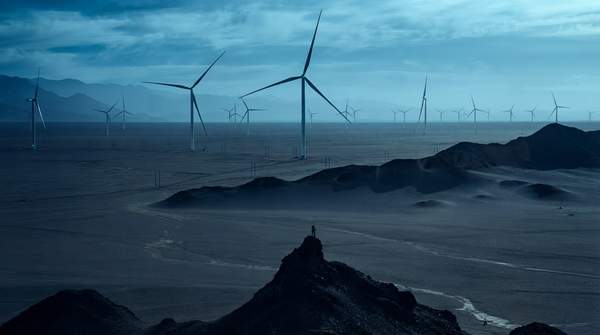
China's exports of solar panels, batteries and electric vehicles could help other countries avoid around 450 million tons of CO2 annually in 2026 — an amount the Centre for Research on Energy and Clean Air says is equivalent to Brazil's annual emissions from fossil fuels, and roughly 2% of all emissions generated outside China.
New Report Highlights China's Role in Global Emissions Reduction
The Helsinki-based Centre for Research on Energy and Clean Air (CREA) published the projection on Thursday, October 29, 2026. Its central finding: clean technologies sold by China — including solar panels, batteries and electric cars — may allow importing countries to avoid approximately 450 million tons of CO2 each year this year.
Put in comparative terms, that avoided pollution matches the annual fossil fuel emissions of Brazil, the world's seventh-largest economy and a nation of more than 200 million people. Expressed as a share of global output, the figure amounts to 2% of the CO2 emitted outside China's own borders. As Bloomberg News reported in covering the study, the finding underscores China's role in speeding up the global energy transition rather than merely supplying it.
It is worth pausing on what this number represents. The 450 million tons are emissions that importing countries would otherwise have produced — largely by burning coal, oil and gas — had Chinese-made clean technology not been deployed at scale. The projection covers the impact of exported products where they are used, not the emissions generated inside China while manufacturing them.
China's Manufacturing Scale Drives Clean Tech Exports
Why does one country's export portfolio carry this much climate weight? The answer lies in manufacturing concentration. According to the energy analytics organization Ember, China produced around 80% of the world's solar PV modules and battery cells in 2024, along with 70% of the world's electric vehicles.
I believe those three shares explain the arithmetic of CREA's projection. Solar modules displace fossil-fired electricity, batteries make variable renewable power usable around the clock, and electric cars replace combustion engines. When a single country manufactures the majority of the world's supply in each of these categories, its export volumes effectively set the pace at which other nations can decarbonize.
Ember, which tracks Chinese clean technology export data by destination with a lag of just a few weeks, describes this manufacturing dominance as an early insight into the scale of the energy transition. The organization also notes its export-value figures are conservative: including parts and raw materials from the wider clean tech value chain would make them larger.
China's Clean Tech Dominance and Global Emissions Impact
The table below connects the two datasets: China's 2024 production shares, compiled by Ember, and the emissions impact that CREA projects for its 2026 exports. Read together, they show how China's majority manufacturing role in solar, batteries and EVs forms the foundation of the 450 million ton figure.
| Category | China's global role | Basis and timing |
|---|---|---|
| Solar PV modules | Produced around 80% of world output | 2024 production data (Ember) |
| Battery cells | Produced around 80% of world output | 2024 production data (Ember) |
| Electric vehicles | Produced around 70% of world output | 2024 production data (Ember) |
| Clean tech exports overall | Projected to help other countries avoid ~450 million tons of CO2 annually | 2026 projection (CREA report, Oct. 29, 2026) |
The connection is structural rather than coincidental. CREA's report identifies solar panels, batteries and electric cars as the exported technologies driving the avoided emissions — the same categories in which China's 2024 production shares were roughly 80%, 80% and 70%, respectively. Manufacturing scale at that level is what makes a Brazil-sized emissions offset achievable through exports alone.
Quantifying the Avoided Emissions: A Brazil-Sized Impact
Where do these avoided emissions materialize? Reporting by New Security Beat, drawing on studies of Chinese clean tech flows to developing regions, offers concrete illustrations. It cites a report finding that Chinese clean tech exports are already curbing emissions in the Global South — estimated at 3% in sub-Saharan Africa and 4.5% across the Middle East and North Africa.
South Africa provides a vivid case. In the first half of 2023, the country's imports of solar panels from China rose roughly sixfold, from about 0.6 gigawatts to 3.4 gigawatts, according to reporting cited by New Security Beat. For a nation that has long depended on coal for the bulk of its electricity — and endured recurring power shortages — cheap imported solar capacity changes both energy access and emissions trajectories at once.
One caution is warranted. The regional figures of 3% and 4.5% come from a report cited by New Security Beat, and CREA's 2026 projection is a separate estimate; the two should not be treated as a single verified dataset. Both point in the same direction, but each carries its own methodology and scope.
That qualification matters, because the underlying logic of CREA's finding is straightforward: the cleanest ton of CO2 is the one never emitted. We must recognize that exported panels, batteries and vehicles are not just trade statistics — they are avoided smokestacks, avoided fuel imports and avoided grid instability in the countries that receive them.
Accelerating Global Decarbonization
For policymakers and industry leaders, the report's implication is that China's clean technology exports — particularly in solar, batteries and EVs — are a substantial accelerant of global decarbonization, and any assessment of international climate progress that ignores them is incomplete.
The projection's limits should be stated plainly. It is a 2026 forecast from a single research organization, reported by news media rather than independently verified here, and it measures the emissions avoided where exported products are used, not the emissions produced in manufacturing them.
The measurable indicator to watch now is continued growth in China's clean tech export volumes alongside sustained CO2 reductions in importing nations, especially in the Global South. Ember's country-level export data, updated monthly with a lag of only a few weeks, and CREA's future estimates will show whether the Brazil-sized offset of 2026 holds, grows, or shrinks in the years ahead.