Photonic computing replaces the electrons that shuttle through silicon transistors with photons, routing light through waveguides and optical components to perform computations. The appeal is real: light travels fast, generates little heat, and can carry many signals in parallel, which is why researchers see integrated photonic logic gates as a candidate for accelerating AI workloads. But the same literature that documents this promise also identifies the obstacles — inefficient nonlinear optical materials, fabrication precision demands, and the difficulty of merging photonic circuits with the electronic systems they must work alongside.
Introduction to Photonic Computing: Light-Speed Logic
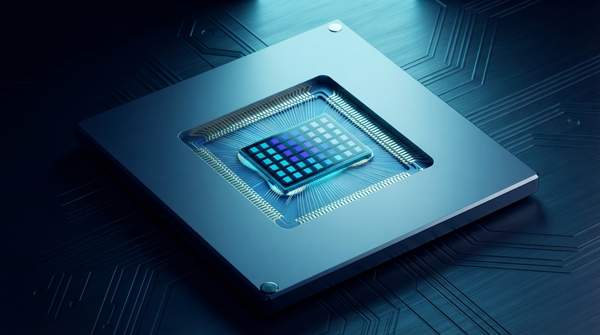
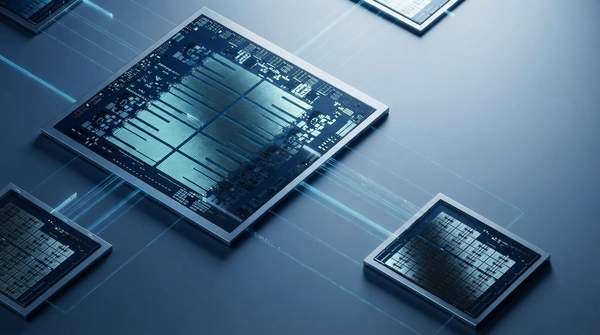
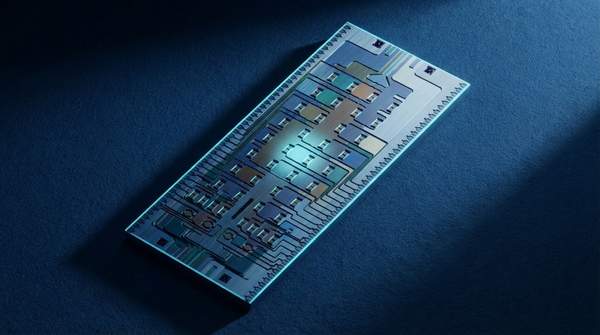
Conventional processors encode information as electrons moving through metal pathways, switching between on and off states as they pass through silicon transistors. That architecture has powered computing for decades, but it runs into physical limitations as components shrink toward atomic scales. Photonic chips take a different route: they integrate lasers, modulators, and photodetectors on a single substrate, forming circuits that manipulate light signals to carry out computational tasks rather than pushing current through wires.
The shift matters because photons differ fundamentally from electrons. Light can be guided, split, and combined without the resistive losses and heat that accompany electron flow, and multiple wavelengths can travel through the same waveguide simultaneously. Those properties are what make optical computing attractive as electronics approach their physical ceiling — and what define the engineering problems that follow.
The Core Principle: How Light Performs Computation
At its heart, computation is about making signals interact in controlled ways. Electronic logic works because a transistor's output depends nonlinearly on its input: a small voltage at the gate determines whether current flows. Light, by contrast, naturally passes through other light without interaction, which is both a gift and a problem. It is a gift because beams can cross and coexist without interference losses; it is a problem because building a logic gate requires one signal to influence another.
Photonic computing solves this by deliberately engineering interactions. Researchers leverage nonlinear optical effects, waveguide engineering, and nanophotonic resonators so that light intensity or phase in one channel controls light in another. Conceptually, the recipe is the same as in electronics: represent data as a signal, route it through components that combine and transform it, and read out a result that depends on the inputs. The difference is that the "switching" happens through optical physics rather than transistor action.