
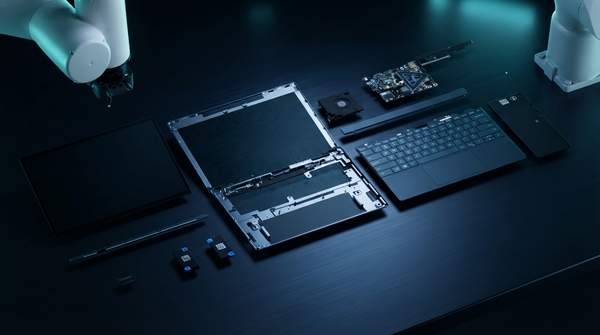
In an era grappling with mounting electronic waste, the longevity and repairability of our devices have become critical considerations for tech professionals and environmentally conscious consumers alike. The traditional "3-year laptop refresh" cycle often leads to a shelf full of discarded, yet still functional, hardware. Two prominent laptop lines, Framework Laptops and the Lenovo ThinkPad X1 Carbon Gen 14 Aura Edition, are challenging this paradigm by prioritizing modular design and user-serviceability, aiming to extend product lifespans and reduce environmental impact.
This comparison delves into the specific differences in modularity, ease of repair, and upgrade options between Framework Laptops (specifically models 12 and 16) and the Lenovo ThinkPad X1 Carbon Gen 14 Aura Edition. By examining their documented modular components, official repair support, and independent iFixit repairability scores, we can outline the practical implications for long-term usability, upgradeability, and environmental sustainability, helping you make an informed purchasing decision.
Framework Laptops: The Modularity Champion
Framework has built its brand around the core principles of repairability, longevity, and environmental responsibility. Their laptops are designed from the ground up to be user-serviceable and upgradeable, aiming to break the cycle of rapid hardware obsolescence. Arbory Digital, for instance, adopted Framework Laptops to reduce their environmental impact and extend the useful life of their equipment, noting that nearly every component is user-serviceable and upgradeable.
Framework's modular design allows users to easily replace or upgrade a wide array of components. This includes memory (RAM), storage, Wi-Fi modules, and even the mainboard, which enables users to update their CPU generation without buying an entirely new laptop. The company provides a comprehensive parts store on its website, offering new and upgraded components, and even supports a market for third-party 3D-printed parts. For example, if a Wi-Fi module fails, a new one can be sent directly to the user for easy replacement. The Framework Laptop 16 further extends this modularity to include a readily replaceable graphics module, according to iFixit.
Lenovo ThinkPad X1 Carbon Gen 14 Aura Edition: A Step Towards Repairability
Lenovo's ThinkPad X1 Carbon Gen 14 Aura Edition represents a significant stride for a mainstream manufacturer in embracing repairability. Unveiled at CES 2026, this model garnered attention and an award for its innovative modular design and commitment to repairability, as reported by ZDNET. It features a "Space Frame" design, which contributes to its repair-friendly nature.
While the ThinkPad X1 Carbon Gen 14 Aura Edition boasts a high degree of modularity for components like storage and the battery, and Lenovo provides thorough repair instructions and sells replacement parts, there is a notable limitation. ZDNET's review highlights that the laptop's RAM is soldered, meaning memory cannot be upgraded by the user after purchase. Despite this, iFixit notes that for other ThinkPad models like the 13w 2-in-1 Gen 3, storage and memory (where not soldered) are readily repairable and upgradeable using industry-standard parts, and procedures for the battery, display, and fan are generally straightforward.


