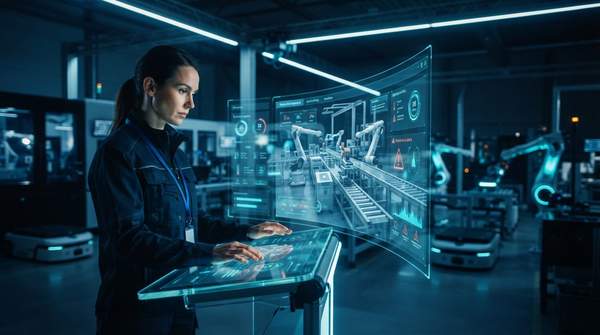
By 2028, factories will increasingly be run by 'agentic AI' systems capable of autonomous decision-making and physical interaction, a profound shift many industrial leaders are only just beginning to grasp. These advanced AI industrial robotics innovations will redefine productivity, moving beyond simple automation to self-optimizing processes. This transformation demands a fundamental re-evaluation of current operational models, extending beyond mere technological upgrades to impact workforce structure and strategic planning.
However, industrial AI is rapidly evolving into autonomous, physical systems, but the human workforce and existing operational paradigms are not keeping pace with the necessary adaptations. This disparity creates a critical tension as industries confront an accelerating technological curve. Current training and skill development programs often lag behind rapid advancements in AI applications, exacerbating this growing divide.
Businesses that fail to strategically integrate agentic and physical AI into their industrial operations by 2028 appear likely to face significant competitive disadvantages and workforce disruption. This impending transformation necessitates immediate and deliberate action, not just in technology adoption, but also in human capital development. The speed of this transition will determine future market leadership, separating agile innovators from those entrenched in outdated operational frameworks.
The Rise of Autonomous Industrial Intelligence
The industrial sector stands at a critical juncture, marked by the emergence of highly specialized artificial intelligence. Agentic AI, physical AI, and domain-specific industrial models are identified as key industrial technology trends for 2026, according to IoT Analytics. These trends mark a departure from earlier forms of automation, which primarily involved programmed, repetitive tasks.
Agentic AI systems operate with independence, making decisions and executing actions without constant human oversight. Think of an agentic AI as a chess grandmaster making moves based on complex strategic analysis, rather than a simple machine following pre-set instructions. This capability allows for dynamic adaptation to changing conditions on a factory floor.
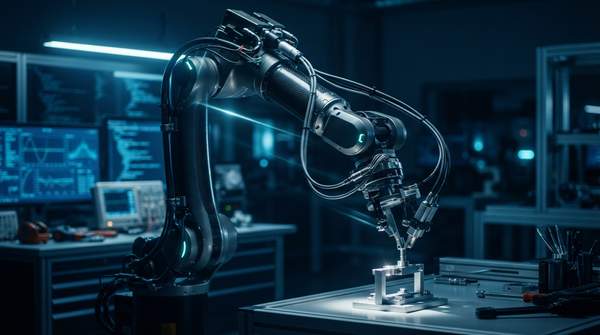
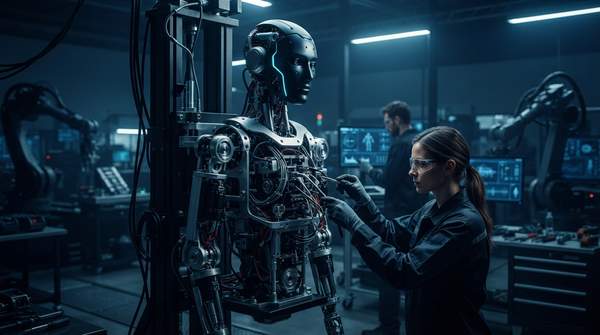
Physical AI, conversely, refers to artificial intelligence embedded directly into robotic hardware, enabling advanced manipulation, navigation, and interaction with the physical world. This integration allows robots to perceive their environment, understand complex tasks, and execute them with precision and adaptability. For instance, a physical AI-powered robot might identify an anomaly on an assembly line, diagnose the issue, and autonomously recalibrate its tools or even perform minor repairs. The effectiveness of these systems is further amplified by domain-specific industrial models, ensuring AI solutions are highly tuned instruments for specific manufacturing challenges, not generic tools. These advancements collectively enable sophisticated autonomous decision-making and physical interaction, fundamentally altering how production lines operate and demanding equally specialized human oversight and collaboration skills.