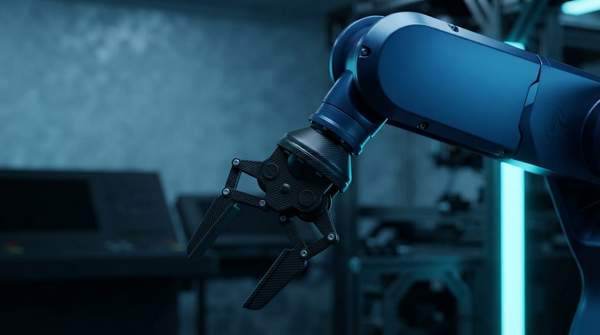
Selecting the right end-effector starts with the workpiece, not the robot brand. That is the consistent conclusion across the selection guides reviewed here: the shape, surface, porosity, fragility, and mass distribution of the object you handle—combined with your task's precision and cycle-time demands—determine the gripping mechanism before any specification numbers matter. This guide distills that logic into a decision framework comparing the three dominant gripper technologies for pick-and-place and material handling, then covers the integration factors that determine whether a sound gripping choice actually works on your production line.
"The end effector is the single most task-critical component on any robot arm. Everything else — the arm, the controller, the training data — only matters if the end effector can physically interact with the objects you care about." — Robotics Center team, 2026 buyer's guide
Key Factors for End-Effector Selection
Most selection guides converge on a small set of criteria, and the order matters. Unchained Robotics, in its end-effector selection guide, frames the evaluation as five criteria reviewed in sequence: the workpiece (shape, weight, material, surface, and sensitivity), followed by the task, environment, robot type, and cycle time. A smooth sheet of metal, the guide notes, requires a fundamentally different approach than a soft bag—an observation that immediately disqualifies any one-size-fits-all tooling decision.
A gripper comparison by RoboCloud Hub emphasizes that the optimal gripper choice prioritizes the object's characteristics over the robot brand. Factors such as shape, surface finish, fragility, porosity, mass distribution, and the object's ability to withstand squeezing should dictate the gripper mechanism before considering specifications like stroke or force. Olympus Technologies, a UK automation firm writing on collaborative robot tooling, adds that the choice between vacuum and mechanical gripping dictates cycle time, part-handling capability, and total system cost—calling it the single most important factor in end-of-arm tooling performance.
Comparing Common End-Effector Types
The three most common gripper technologies for material handling differ fundamentally in how they hold a part. Mechanical end-effectors employ physical fingers, claws, or jaws—typically two or three actuated fingers—to grasp objects and provide precise control over gripping force. Because the fingers adapt to various object geometries, they are versatile across shapes and sizes, including parts with complex geometries, but the workpiece must tolerate squeezing.
Vacuum grippers take the opposite approach: they hold parts from one side using negative pressure, typically through suction cups. This makes them ideal for flat, smooth, non-porous surfaces, and Olympus Technologies notes that a vacuum gripper can deliver faster cycles on such items than a mechanical equivalent. The same properties make them unsuitable for porous or irregularly shaped parts, where suction cannot seal or the geometry offers no usable surface. Vacuum gripping is also widely used for lightweight, non-magnetic materials such as plastic, glass, cardboard, wood, and aluminum.
Magnetic grippers use magnetic force to hold ferromagnetic workpieces—steel plates, machined components, pipes, and bars. Because the mechanism requires no vacuum cups or complex jaws, magnetic gripper vendors describe them as a simple, reliable solution for CNC machine tending, welding cells, press automation, and steel processing. The trade-off is absolute: the technique works only on ferrous materials and cannot handle the plastics, glass, or aluminum that vacuum grippers manage well.
End-Effector Selection Decision Framework
Use the table below to map your workpiece and task characteristics to the most suitable gripper technology, based on each mechanism's documented operating principle and limitations. Read down the rows that match your part; a technology appearing as "poor fit" is excluded by its mechanism, not by any deficiency in a particular product. Adaptive mechanical designs—grippers with flexible fingers, adjustable grip force, and sensor feedback—can relax some mechanical-gripper limitations, as Patsnap Eureka's comparison of two- and three-fingered models explains.
| Requirement / scenario | Mechanical gripper | Vacuum gripper | Magnetic gripper |
|---|---|---|---|
| Gripping mechanism | Fingers or jaws physically grasp the object, usually two or three actuated fingers | Negative pressure via suction cups holds the part from one side | Magnetic force holds the workpiece directly |
| Flat, smooth, non-porous surfaces | Works, but finger placement is needed | Best fit — enables fast, one-sided handling | Works only if the part is ferrous |
| Porous materials | Works if the part tolerates squeezing | Poor fit — suction cannot seal | Works only for ferrous porous stock |
| Complex or varied geometries | Best fit — fingers adapt to different shapes | Poor fit — irregular shapes defeat the suction seal | Limited to ferrous parts |
| Fragile items requiring gentle contact | Risk of crush damage; grip force must be adjustable | Suitable when the surface is smooth and non-porous | Only for ferrous parts; no ferrous fragile items exist in most plastics or glass work |
| Ferrous workpieces — steel plates, pipes, bars | Works with adequate jaw design | Works only on smooth, sealed surfaces | Best fit — designed specifically for iron-based workpieces |
| Non-magnetic materials — plastic, glass, cardboard, wood, aluminum | Works with correct gripper design | Best fit for smooth, non-porous examples | Poor fit — material is not ferromagnetic |
| Cycle time on suitable parts | Solid for general pick-and-place | Faster cycles on flat, non-porous items | Simple, reliable handling in steel-oriented cells |
The framework points to clear recommendations. Flat, sealed, non-ferrous parts point toward vacuum; heavy or varied-geometry parts that tolerate contact point toward mechanical; and steel plates, pipes, and machined ferrous components point toward magnetic. Any scenario combining fragility with porosity or irregular geometry is the hardest case, and the table exposes where a standard mechanism fails—an indicator, covered below, that a custom solution may be justified.
Integration and Compatibility Considerations
A gripper that matches the workpiece can still fail in service if it does not integrate with the rest of the cell. The IMTS end-effector guide emphasizes that end-of-arm tooling must not only physically fit the robot but also integrate with power, communication, and control systems while ensuring safe, consistent operation. Its key factors run beyond the mechanism itself: compatibility with the robot's mechanical and control interfaces, environmental conditions, and application-specific requirements such as part fragility or throughput demands.
Production variety adds a further planning dimension. The same guide notes that tooling must adapt to differences in part size, shape, surface texture, and fragility, as well as production speed—and that engineers must decide early whether to select single-part or multi-part handling. Fictiv's design and manufacturing guide, written by David Willson, adds a practical split within the tooling itself: standard components such as gripper bodies, suction cups, vacuum generators, and tool-changer master plates can be purchased off the shelf, while the physical interfaces—custom jaw profiles, vacuum manifolds, and mounting brackets—are typically engineered for the specific application. Planning the boundary between those two categories is where integration cost is won or lost.
Standard vs. Custom End-Effectors: Trade-offs for Flexible Production
Standard, off-the-shelf tooling offers faster integration and predictable cost, and it covers the common cases the decision framework resolves cleanly. Custom engineering becomes necessary, per the evidence gathered here, for unique applications involving complex geometries, fragile materials, or specific environmental conditions that standard components cannot accommodate. Fictiv's guide frames the custom path not as a product purchase but as a design problem: a custom end-effector's architecture involves material selection and manufacturing choices, where 6061-T6 aluminum serves as the default for structural bodies, 7075-T6 suits heavy payloads or tight volumetric constraints, and machined features such as dowel pin holes and bearing seats provide the tight tolerances and stiffness that reliable production designs require.
The practical trade-off for flexible production lines is therefore not "standard or custom" as a binary but where to draw the line within one tool. Most reliable custom designs, per Fictiv, combine machined structural elements with 3D-printed complex contact geometries and internal vacuum channels in a hybrid architecture. That hybrid approach lets a line keep the cost and lead-time benefits of standard gripper bodies and cups while tailoring only the interfaces that touch the actual workpieces. This article stops short of design instructions—the boundary here is the decision, not the drafting.
Making an Informed End-Effector Choice
Manufacturing engineers should systematically evaluate their specific workpiece and task requirements, considering both gripping mechanism suitability and integration factors, to select the most appropriate end-effector technology. The framework above makes that evaluation concrete: identify the part's material, shape, surface, and fragility; check which mechanisms the physics excludes; then verify the survivor against your robot's mechanical and control interfaces, environment, and throughput demands before committing to standard or custom tooling.
Whether the choice was right is measurable, and the indicator is not a specification sheet. Success shows up as successful integration of the chosen end-effector with the robot system, demonstrated by consistent and efficient handling of workpieces within specified cycle times and without damage. If parts slip, seal failures recur, or fragile items deform, the framework's row for that scenario signals which alternative mechanism to test next—an evidence-based iteration loop rather than a restart from scratch.
Sources
- Robot End Effectors: Types, Specs & Where to Buy (2026 Guide) — Roboticscenter
- Robot Grippers Compared 2026: Grip Force, Stroke, Cost & Market Share — RoboCloud Hub
- Vacuum vs Mechanical Grippers for Cobots — Olympus Technologies
- Vacuum vs Mechanical vs Magnetic Grippers — ANUBIS 3D
- Robotic End Effector Guide: End of Arm Tooling Types and Trends — IMTS
- Custom Robotic End Effectors and EOAT: Design and Manufacturing Guide — Fictiv