The honest answer for most industrial automation teams is that no single platform wins on every axis. The choice between NVIDIA Isaac Sim, Siemens Tecnomatix, and Unity Industry comes down to one question: is your primary goal high-fidelity physics simulation for virtual validation and AI training, or end-to-end production process optimization and factory layout planning? Isaac Sim and Unity serve the first goal; Tecnomatix is built for the second. Company scale narrows the field further—a general digital twin comparison lists NVIDIA Omniverse, which includes Isaac Sim, as best suited to large organizations, while Unity Industry is positioned as a practical option for organizations needing flexible 3D simulation, including smaller teams.
Introduction to Robotics Simulation in Industrial Automation
Robotics simulation exists to solve an economic problem: experimenting with real capital equipment ties up machines and production floors. Siemens frames the core benefit bluntly—robotics simulation lets manufacturers design and optimize automated manufacturing processes without the time and cost penalties of occupying capital equipment, and enables virtual commissioning, where complete production systems are tested in a digital environment before deployment. The payoff is faster product launch cycles and smoother integration with real-world operations.
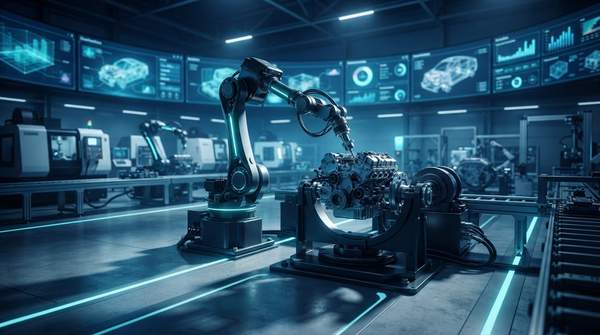
Within that shared purpose, the three platforms in this comparison diverge sharply. One is calibrated to reproduce real-world physics so faithfully that AI policies can transfer to machinery; one models entire production processes and workflows; one offers high-accuracy rendering and real-time performance for detailed, immersive simulation. A Visual Components guide on robot simulation software describes the shared end state: with a complete digital model of a cell, robot motions are integrated with triggers and sensors, timing for each step is determined, and once the program is optimized, it is copied to the robot controller—with only a final clean-up needed after the physical cell is installed.
NVIDIA Isaac Sim: High-Fidelity Physics and AI Training
Isaac Sim's distinctive capability is closed-loop calibration against physical reality. Reporting from Industry EMEA describes how engineers compare physical telemetry datasets directly against simulation runs in Isaac Sim, iteratively calibrating digital twin parameters until the virtual model accurately reproduces real-world component physics. This is not a one-time verification step but a continuous alignment process, and it is the platform's central value proposition.
The payoff, in the long term, is transferability: narrowing the divergence between virtual validation and physical operation enables control code and AI policies trained in simulation to move directly to factory floor machinery with minimal manual adaptation. The reporting highlights a joint virtual handling cell developed by Festo, ABB Robotics, and NVIDIA, addressing the timing, workspace interference, and controller synchronization challenges that arise when linear gantry or cartesian handling units are combined with articulated industrial robots. On scale, a general digital twin platform comparison positions NVIDIA Omniverse—of which Isaac Sim is a part—as best suited for large organizations building advanced industrial digital twins with realistic 3D environments and complex simulation workflows.
Siemens Tecnomatix: End-to-End Production Process Optimization
Tecnomatix approaches simulation from the opposite direction: rather than perfecting the physics of a single robot or cell, it optimizes the production process as a whole. Siemens positions its robotics simulation offering—anchored by Tecnomatix Process Simulate—as a way for manufacturers to design and optimize automated manufacturing processes digitally, and a general platform comparison describes it as a strong choice for manufacturers optimizing factory automation, production workflows, and robotic operations.
For robot task programming specifically, the workflow that Visual Components describes applies directly: program the robot virtually against a complete cell model, optimize each motion and trigger, then copy the program to the physical controller. Siemens emphasizes virtual commissioning—validating complete production systems before deployment—which matters most to large manufacturers running complex, multi-line operations where integration failures are expensive. The platform's center of gravity is the factory and its workflows, not the fidelity of a single robot's physics.
Unity Industry: Flexible Real-Time 3D Development
Unity Industry occupies the flexible middle ground. A 2025 study published in Electronics comparing Unity with the open-source Gazebo simulator found that higher accuracy is observed in digital twins developed in Unity, underscoring what the authors call Unity's advanced rendering and physics simulation capabilities. Unity stood out in their comparison for advanced graphics rendering, high accuracy, and low latency—attributes the authors say make it preferable for applications requiring high fidelity and real-time performance.
The study notes that industries requiring precision and prompt feedback, including industrial automation and precision manufacturing, can leverage these capabilities. Importantly for budget-conscious teams, the same study points out that while Unity's student and personal plans are free, an enterprise or industrial subscription must be purchased—a real cost consideration for smaller organizations. The general digital twin comparison accordingly lists Unity Industry among its top options for small and medium businesses, described as a practical option for organizations needing flexible 3D simulation and visualization capabilities.
Robotics Simulation Platform Decision Matrix
The matrix below contrasts the three platforms across the decision criteria that most often separate industrial automation buyers: who each is built for, what it does best, and what kind of simulation it centers on. Use it to shortlist before evaluating licensing and integration details.
| Platform | Ideal User Profile | Primary Strength | Simulation Focus |
|---|---|---|---|
| NVIDIA Isaac Sim | Large organizations building advanced industrial digital twins with complex simulation workflows | Iteratively calibrated physics—virtual models tuned until they reproduce real-world component physics | Virtual validation and AI policy training, aiming for minimal manual adaptation when transferring code to factory floor machinery |
| Siemens Tecnomatix | Manufacturers optimizing factory automation, production workflows, and robotic operations | End-to-end production process optimization, factory layout, and robot task programming via Process Simulate | Improving efficiency, virtual commissioning of complete production systems, and validating robot programs against a full cell model before copying them to the controller |
| Unity Industry | Organizations needing flexible 3D simulation—ranked among top SMB options—including teams requiring detailed, immersive simulation | Advanced graphics rendering, high accuracy, and low latency, measured against Gazebo in published tests | High-fidelity, real-time 3D simulation for precision applications such as industrial automation and precision manufacturing |
Two qualifications belong alongside this matrix. The rendering and accuracy advantages attributed to Unity come from tests against Gazebo specifically, not against Isaac Sim or Tecnomatix. And the realistic 3D environments cited for NVIDIA come from evidence about Omniverse as a whole, of which Isaac Sim is a component.
Understanding the Trade-off: Physics Simulation vs. Process Optimization
The deepest distinction here is not feature-by-feature but architectural. Isaac Sim's method is bottom-up: reproduce component physics so accurately, through iterative calibration against telemetry, that simulated control code survives contact with real machinery. Tecnomatix's method is top-down: model the whole production system, optimize its workflows and layout, and validate them before anything is installed. Unity sits closer to the first approach—its value is fidelity and real-time responsiveness within a flexible development environment—but the evidence base for its accuracy is a direct simulator comparison, not a factory deployment study.
Neither approach dominates. A team training AI policies for a robotic handling cell needs the bottom-up fidelity Isaac Sim targets; a team re-planning a factory line to eliminate workspace interference and shorten launch cycles needs the top-down process view Tecnomatix provides. Notably, the same outcome—simulated programs transferring to physical controllers with minimal cleanup—appears in both the Isaac Sim reporting and the general robot simulation workflow, which suggests the two philosophies converge on the same success measure even as they build toward it differently.
Choosing Your Robotics Simulation Platform
Select the platform that aligns with your primary industrial automation goal: high-fidelity physics for virtual validation and AI training (NVIDIA Isaac Sim, Unity Industry) or comprehensive production process optimization and factory layout planning (Siemens Tecnomatix). Scale reinforces the split: the evidence points large enterprises toward Omniverse-based Isaac Sim deployments and process-scale Tecnomatix installations, while Unity Industry's flexibility and positioning make it the SMB-friendly option—offset by the cost of an industrial subscription.
Whatever you choose, pilot against a single cell before committing the factory. The measurable indicator of success is the successful transfer of simulated robot control code or optimized factory layouts to physical operations with minimal adaptation—if a pilot project requires extensive rework after installation, that is a signal the platform's simulation focus does not match your workflow, and the decision should be revisited. The evidence here covers these three platforms only, draws on published documentation and studies rather than hands-on benchmarking, and does not resolve API extensibility or third-party integrations—questions to raise directly with each vendor during procurement.