Belfast-based cleantech firm CATAGEN has secured commercial funding to advance its sustainable aviation fuel (SAF) technology, backed by a crucial loan guarantee from UK Export Finance (UKEF), the government's export credit agency. The announcement on October 1, 2026, signals a key step in addressing the significant financial barriers that have challenged the growth of a domestic SAF industry in the United Kingdom.
The financing is set to propel CATAGEN's new division, ClimaHtech Green Flight, from late-stage development into commercial production. This move exemplifies a government-backed strategy to de-risk private investment in capital-intensive green technologies, a model seen as vital for meeting the UK's aviation decarbonization goals.
CATAGEN's ClimaHtech Green Flight: Modular SAF Innovation
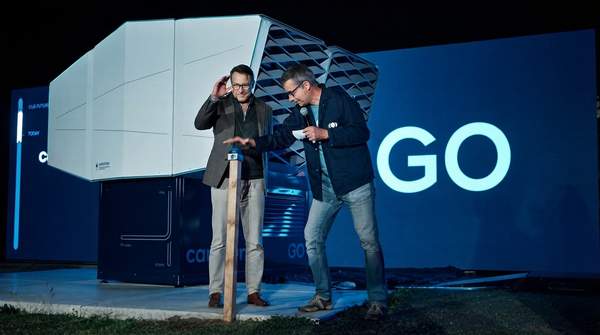
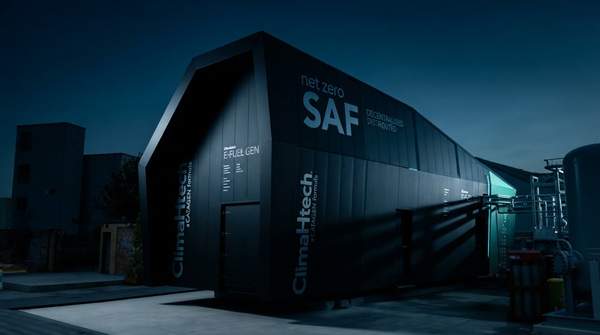
The newly secured funding will directly support CATAGEN's innovative approach to producing sustainable aviation fuel. The company's Green Flight technology is designed to create SAF with very low carbon emissions through a system of small, modular production units. According to the company, this design allows for flexible deployment in different locations and can be scaled up as demand for SAF increases.
CATAGEN, which employs 50 staff and supports a network of 85 UK-based suppliers, aims to use the capital to accelerate its technology to market and pursue international growth. The government backing was described as a critical enabler for this transition. "The backing from UKEF has been instrumental in bridging the gap between late-stage product development and commercialisation," said Dr. Andrew Woods, CEO and Founder of CATAGEN.
The government has framed the support as part of a broader industrial strategy. "CATAGEN is exactly the kind of innovative business this Government wants to back to expand as we look to drive growth in every postcode," said Minister for Trade Anas Sarwar.
How a UKEF Loan Guarantee De-Risks SAF Investment
The financing secured by CATAGEN is not a direct government loan but rather commercial funding made possible by a government guarantee. This mechanism is designed to overcome the specific hurdles that prevent innovative but high-risk projects from attracting private capital. The process addresses distinct challenges for each party involved.
- The Project Challenge: High Perceived Risk. Developers of UK-based SAF plants find it difficult to access private finance due to significant perceived risks related to new technology, volatile pricing, and feedstock availability, as identified by the Green Finance Institute. These factors can make a project appear too uncertain for commercial lenders who require a high degree of confidence in their return on investment.
- The Lender's Dilemma: Unacceptable Exposure. For a commercial bank, lending to a company with a novel, unproven technology in a nascent market represents a high-risk proposition. Without a way to mitigate potential losses, the bank may be unwilling to provide the substantial capital required for commercial-scale production facilities.
- The UKEF Intervention: Mitigating Risk. UK Export Finance steps in to provide a loan guarantee. This guarantee acts as a form of insurance for the commercial lender, covering a portion of their potential losses if the project fails to repay the loan. A World Economic Forum report notes that such guarantees "help mitigate risks for SAF projects," improving their "bankability" and lowering interest rates.
- The Outcome for CATAGEN: Unlocking Capital. With the lender's risk significantly reduced by the UKEF guarantee, the project becomes a viable investment. CATAGEN gains access to the commercial funding necessary to build out its production capacity, enter the market, and pursue its export ambitions.
Addressing the UK's SAF Financing Challenge
The support for CATAGEN provides a real-world example of a solution to a systemic problem in the UK's green transition. The Green Finance Institute has highlighted that UK SAF developers consistently struggle to access finance, creating a bottleneck in the country's ability to build a domestic production industry. This financing gap persists despite government mandates and the potential for SAF to deliver greenhouse gas emissions reductions of up to 80% compared to conventional jet fuel.
Financial de-risking tools like loan guarantees are recognized internationally as a key enabler for the sector. According to a February 2025 report from the World Economic Forum, such mechanisms are critical for two reasons. First, they attract more interest from institutional lenders because companies that secure them are considered "reliable and future-proof," having passed a thorough due diligence process. Second, the de-risking nature of the guarantee typically results in lower interest rates for the borrower.
By backing CATAGEN, UKEF is helping the company move into commercial production and reach overseas customers, according to Lauren Dougherty, the agency's Export Finance Manager for Northern Ireland. The government will further promote these financing options at the UKEF Northern Ireland Business Forum in Belfast on October 6, 2026.
Implications for UK's Sustainable Aviation Future
The UKEF loan guarantee for CATAGEN demonstrates a viable model for de-risking private investment in critical sustainable aviation fuel (SAF) technologies. By bridging the financing gap for one company, it provides a potential template for unlocking the billions in private capital needed to establish a robust domestic SAF industry and meet the UK's decarbonization targets.
The success of this approach will be seen in future developments. The key measurable indicator will be subsequent announcements of similar government-backed financing deals for other UK SAF developers, alongside tangible progress reports on CATAGEN's commercial deployment and international expansion.
Sources
- Belfast cleantech firm CATAGEN takes off with government-backed finance — GOV.UK
- Belfast cleantech firm secures government-backed finance — Insider Media Ltd
- Sustainable Aviation — Green Finance Institute
- Reports