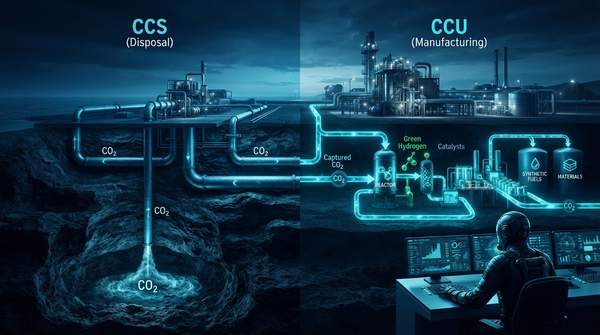
Carbon capture and sequestration (CCS) and carbon capture utilization (CCU) share a first step—pulling CO2 out of an exhaust stream or the air—but they diverge immediately afterward. CCS is a disposal strategy: the captured CO2 is injected into deep underground geologic formations so it will not enter the atmosphere. CCU is a manufacturing strategy: the captured CO2 becomes an input to fuels, chemicals, or materials that are sold into product markets. That single fork in the road drives everything else that matters to a sustainability officer or investor: the economic model, the risk profile, and whether the climate benefit is durable or temporary.
Introduction: Differentiating Carbon Capture Strategies
The U.S. Department of Energy describes the umbrella process—carbon capture, utilization and storage—as capturing CO2 emissions from sources like coal-fired power plants and then either reusing or storing it so it will not enter the atmosphere. The choice between reuse and storage is not a technical footnote; it defines two different businesses. As Liquid Wind's Emma Henriksson has noted, CCS refers to capturing CO2 and storing it permanently underground, while CCU converts the extracted CO2 into valuable products such as fuels and chemicals. She also observes a public perception that the two techniques compete, reflected in how some governmental funding mechanisms support one over the other.
I believe that framing the choice as competition misses the point. The real question for any evaluator is simpler: what happens to the carbon after capture, and who pays for the project to keep running? Answer those two questions and the strategic profile of the project becomes clear.