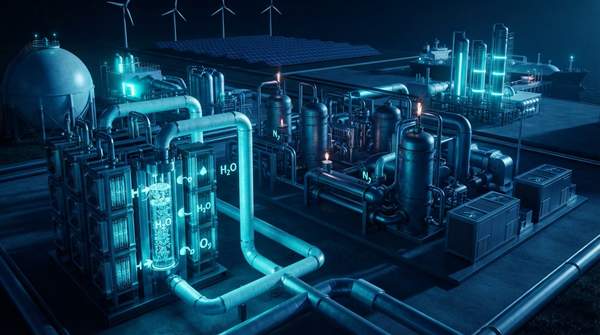
Green ammonia is made in two chemical stages: first, hydrogen is split from water using renewable electricity; second, that hydrogen is reacted with nitrogen taken from the air in the Haber-Bosch process to form ammonia. The inputs are simple—renewable power, water, and air—but the payoff is significant. Because the process avoids the fossil-fuel-based hydrogen that dominates conventional ammonia manufacturing, it offers a low-carbon route to fertilizer and an emerging zero-carbon fuel for deep-sea shipping.
What Is Green Ammonia?
Ammonia itself is not new. The molecule, NH₃, has been synthesized at industrial scale for a century, and agriculture remains its largest market. What is new is the energy and feedstock mix behind it. The Royal Society describes one route to green ammonia as using hydrogen from water electrolysis and nitrogen separated from the air, fed into the Haber process, with the whole chain powered by sustainable electricity.
The distinction matters because conventional production is carbon-intensive. Ammonia is most commonly made from methane, water, and air, using steam methane reforming (SMR) to produce the hydrogen before the Haber process runs; roughly 90% of the carbon dioxide produced comes from the SMR step, according to the Royal Society. Green ammonia keeps the same synthesis chemistry but swaps the fossil-derived hydrogen for electrolytic hydrogen and powers everything with renewables. As Stargate Hydrogen's Fernando Camargo puts it, the underlying synthesis reaction is unchanged—the difference lies in the hydrogen source.
Step 1: Producing Green Hydrogen via Electrolysis
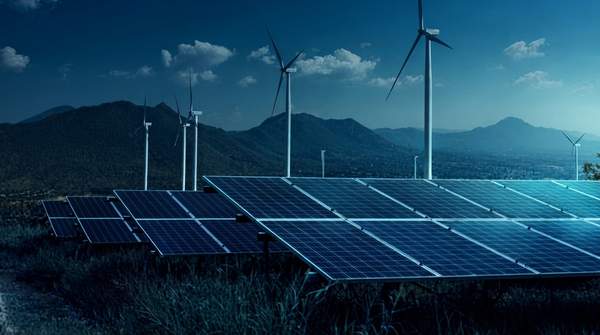
Everything starts with water and clean power. In electrolysis, water is decomposed into hydrogen and oxygen using electrical energy generated from renewable sources such as wind or solar, as Iberdrola and Air Liquide both explain. The hydrogen that emerges is "green" precisely because the electricity driving the split came from renewables rather than fossil fuels.
This stage is the heart of what makes the final product green. The Royal Society notes that green hydrogen—produced via water electrolysis using sustainable electricity—is among the most likely short-term options for creating carbon-free hydrogen at scale. It stands in contrast to blue hydrogen, where emissions from steam methane reforming are captured and stored rather than avoided at the source.
Electrolysis is also the most energy-demanding link in the chain, which is why the availability and cost of renewable electricity largely determine where green ammonia projects make sense. I will not compare electrolyzer technologies here—the evidence for that comparison is outside this article's scope—but the principle is constant: renewable electrons in, hydrogen out.
Step 2: Synthesizing Ammonia with the Haber-Bosch Process
The second stage is a century-old workhorse. In the Haber-Bosch process, hydrogen and nitrogen are reacted together at high temperatures and pressures to produce ammonia. Iberdrola adds a key detail: the reaction occurs in the presence of a catalyst, combining green hydrogen with atmospheric nitrogen to form the final product.
Where does the nitrogen come from? The air around us. thyssenkrupp Uhde, which builds ammonia plants, describes nitrogen generation via air separation, and Air Liquide similarly notes that nitrogen is obtained from the atmosphere through air separation units, providing a high-purity input for synthesis. Stargate Hydrogen frames the full pathway as three systems working in sequence: an electrolyser producing hydrogen from water, an air separation unit extracting nitrogen, and a Haber-Bosch synthesis loop combining the two into ammonia.
The chemistry is unchanged from conventional production—N₂ plus 3H₂ yields 2NH₃—but in the green variant the synthesis loop, like the electrolyser, is powered by renewable electricity rather than fossil energy. That is the entire trick: same molecule, different energy story.
Key Inputs for Green Ammonia Production
Strip away the engineering, and a green ammonia plant needs remarkably few raw materials. The essential inputs are:
- Renewable electricity — from sources like wind or solar, powering both the electrolyser and the synthesis loop.
- Water — the feedstock that electrolysis splits into hydrogen and oxygen.
- Air — the source of nitrogen, extracted through air separation.
From these three inputs flow two intermediate products—green hydrogen and high-purity nitrogen—which meet in the Haber-Bosch reactor. thyssenkrupp Uhde highlights a practical benefit of this input mix: green ammonia production is independent of natural gas resources, and the company reports its technology can respond dynamically to fluctuating power input, a useful trait when the plant runs on variable renewables.
One consideration deserves mention even though it sits outside this article's scope: ammonia is a hazardous chemical, and handling it safely at industrial scale requires established protocols that any project must address.
Applications of Green Ammonia in Decarbonization
Why go to all this trouble? Because ammonia already underpins the global food system and is expanding into new roles. Agriculture is the largest consumer of ammonia, and the push to reduce greenhouse gas emissions in food supply chains is forcing a shift toward low-carbon inputs, as carbon-intelligence firm Sylvera explains. Green ammonia lets fertilizer production continue while cutting the emissions embedded in it.
The stakes are large. A study published in PMC on low-carbon ammonia and sustainable agriculture reports that existing ammonia plants, given their longevity, are committed to emitting up to 15.5 gigatonnes of CO₂ over their remaining lifetimes if not decarbonized. The same study notes that interest in ammonia is expanding beyond agriculture due to its potential as a carbon-free hydrogen carrier and renewable fuel, with projections of up to 600 million tonnes of ammonia per year by 2050 across various applications.
Shipping is the most prominent emerging use. Sylvera reports that the maritime sector views green ammonia as a solution for deep-sea shipping, with regulations like FuelEU Maritime and the IMO's revised strategies pushing shipowners toward zero-carbon alternatives. Ammonia is also gaining traction as a practical way to transport and store hydrogen at scale, since it can carry the energy of green hydrogen in a form that is easier to ship and store than hydrogen itself.
The Green Ammonia Production Chain: A Visual Explainer
The clearest way to understand green ammonia is to trace the chain from raw inputs to end uses. The sequence below maps each stage, its inputs, and its outputs, so you can follow the path from renewable electricity and water to fertilizer and marine fuel.
| Stage | Inputs | What happens | Output |
|---|---|---|---|
| 1. Water electrolysis | Water; renewable electricity (wind or solar) | Water is decomposed into hydrogen and oxygen | Green hydrogen |
| 2. Air separation | Air | Nitrogen is extracted from the atmosphere in air separation units | High-purity nitrogen |
| 3. Haber-Bosch synthesis | Green hydrogen; nitrogen; renewable electricity | Hydrogen and nitrogen react at high temperature and pressure over a catalyst | Green ammonia (NH₃) |
| 4. End use | Green ammonia | Applied as low-carbon fertilizer, shipping fuel, or hydrogen carrier | Decarbonized agriculture and maritime transport |
Reading the table top to bottom, you can see why the process is described as two chemical stages wrapped by one energy source: electrolysis makes the hydrogen, air separation supplies the nitrogen, Haber-Bosch unites them, and renewable electricity powers the whole chain. Change the electricity source to fossil fuels or the hydrogen source to natural gas, and the product stops being green.
Understanding Green Ammonia's Role in Decarbonization
Readers should recognize green ammonia as a viable, two-stage chemical process for producing a low-carbon alternative to conventional ammonia, crucial for industrial decarbonization. The technology is not speculative: it pairs a proven synthesis route, Haber-Bosch, with electrolytic hydrogen, and the only fundamental change is where the hydrogen and the power come from.
The measurable indicator to watch is the increasing adoption of green ammonia in fertilizer production and as a marine fuel, alongside policy support for renewable energy integration in industrial processes. Concretely, that means tracking new green ammonia plants replacing SMR-based capacity, the uptake of ammonia-fueled vessels under FuelEU Maritime and IMO rules, and the projected growth toward hundreds of millions of tonnes per year by mid-century. Each new plant that runs on wind or solar power instead of natural gas is a step toward cutting the substantial emissions the existing fleet of ammonia facilities is otherwise committed to producing.
Sources
- Green ammonia — Royalsociety
- The Future of Ammonia Production is Green – by Paul Erik Oli - Stargate Hydrogen
- Green ammonia - Iberdrola
- Green Ammonia — Thyssenkrupp UHDE
- Green Ammonia Explained: Full Guide to Production, Uses, and Role in Sustainability — EG
- Green Ammonia: How It’s Made, What It Costs, and How to Verify Carbon Intensity — Sylvera
- Low-carbon ammonia production is essential for resilient and sustainable agriculture - PMC