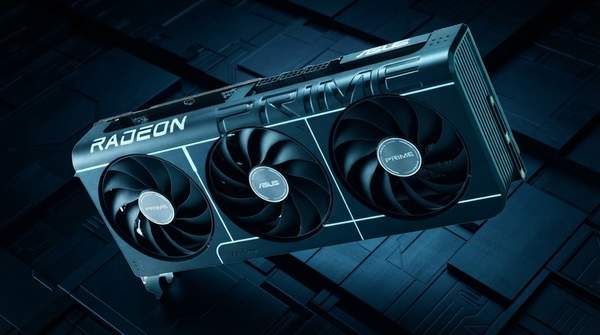
NVIDIA's RTX Spark PCs improve gaming by pairing a Blackwell RTX GPU's fifth-generation Tensor Cores with DLSS 5 software, whose 3D-Guided Neural Rendering model just became 2X faster and whose Ray Reconstruction replaces traditional denoisers with an AI network. The result, according to NVIDIA, is sharper ray-traced scenes and frame rates boosted by up to 1.4x in supported titles like NBA 2K27 and Hogwarts Legacy.
NVIDIA RTX Spark: The AI-Powered Gaming Revolution
RTX Spark is NVIDIA's attempt to fuse AI-accelerated gaming into a portable Windows PC platform. Per NVIDIA's launch announcement, Blackwell RTX graphics "enhance image quality and accelerate performance in supported titles," with launch support spanning Cyberpunk 2077, Fortnite, Gears of War: E-Day, Marvel Rivals, World of Warcraft, and NBA 2K27. NBA 2K27 leads the showcase, using DLSS 5's 3D-Guided Neural Rendering to enhance lighting and material detail. A new 2x faster AI model, available at launch, boosts DLSS 5 frame rates by up to 1.4x.
Blackwell GPU and 5th-Gen Tensor Cores: The Hardware Foundation
Why does this matter architecturally? Tensor Cores are dedicated hardware for AI model acceleration, and Blackwell's fifth-generation units run the neural networks that make DLSS 5 possible. As Wccftech's Hassan Mujtaba reports, these cores accelerate the AI models while NVIDIA Reflex reduces latency by coordinating CPU and GPU work. The key distinction from traditional rendering: instead of computing every pixel through brute-force shading, the GPU delegates reconstruction and enhancement work to neural networks running on silicon purpose-built for matrix math. I believe this division of labor is the quiet revolution here.
DLSS 5: Ray Reconstruction for Enhanced Visuals
Ray tracing produces noisy images unless denoised, and historically that meant hand-tuned denoisers. Ray Reconstruction replaces them with an AI network trained on an NVIDIA supercomputer that reconstructs sharper, more stable, higher-fidelity images. The model combines denoising and Super Resolution, preserving lighting detail in reflections and indirect illumination and reducing artifacts as scenes change. Its benefit is image quality in ray-traced and path-traced scenes, rather than raw frame rate.
DLSS 5: 3D-Guided Neural Rendering for Performance Uplift
3D-Guided Neural Rendering is the performance story. It uses the game's rendered frame and motion vectors to enhance lighting and material detail while preserving scene structure and character identity. According to NVIDIA's Andrew Burnes, the DLSS 5 October update made the model 2X faster through pipeline optimizations and neural model refinements, shrinking its footprint by 24% to roughly 118 million parameters, cutting 4K VRAM usage by 20%, and halving GPU overhead versus the September version while maintaining comparable visual fidelity. Developers can tune where the effect appears, retaining control over visual design, and DLSS 5 works with rasterization, ray tracing, or path tracing, independently of other DLSS features.
The RTX Spark AI-Enhanced Rendering Pipeline
Here is how a frame moves through the system, stage by stage, distinguishing AI hardware's role from each software component's contribution:
- Initial game frame and data: The game renders a frame, producing the image plus motion vectors that describe how the scene is moving.
- Tensor Core processing: Blackwell's fifth-generation Tensor Cores accelerate the DLSS 5 AI models, while Reflex coordinates CPU and GPU work to reduce latency.
- Ray Reconstruction: Where ray tracing or path tracing is active, the supercomputer-trained AI network replaces hand-tuned denoisers, reconstructing sharper, more stable images and preserving lighting detail in reflections and indirect illumination.
- 3D-Guided Neural Rendering: Using the rendered frame and motion vectors, the model enhances lighting and material detail while preserving structure and character identity, at half the GPU overhead of its September version.
- Final enhanced frame: The player receives a frame with improved image quality and accelerated performance, as seen in NBA 2K27's enhanced lighting and material realism.
The sequence shows why the hardware and software are inseparable: the Tensor Cores supply the compute, Ray Reconstruction targets fidelity, and 3D-Guided Neural Rendering targets both frame rate and visual quality.
Tangible Gaming Improvements and Examples
What does this mean at the desk? In NBA 2K27, NVIDIA says 3D-Guided Neural Rendering enhances lighting and material details for greater realism, with the 2x faster model lifting DLSS 5 frame rates by up to 1.4x. Hogwarts Legacy already supports DLSS Multi Frame Generation and Ray Reconstruction on GeForce RTX PCs, and on November 5th an update adds DLSS Neural Rendering for RTX Spark, with other DLSS technologies upgraded to their newest versions. Avalanche Software used DLSS 5's SDK controls to tune the integration and maintain the game's artistic intent. One caveat: these figures come from NVIDIA's announcements and initial coverage, not independent third-party benchmarks, and the supported-game list here is illustrative, not comprehensive.
Experience Next-Gen Gaming with RTX Spark
Gamers seeking enhanced visual fidelity and higher frame rates in supported titles should consider RTX Spark PCs, leveraging the integrated Blackwell GPU and DLSS 5 technologies. Monitor game performance metrics and visual quality in titles like Cyberpunk 2077, Fortnite, and Hogwarts Legacy, noting improvements in ray-traced scenes and overall frame rates. The November 5th Hogwarts Legacy update is the next concrete checkpoint: it will show whether the halved GPU overhead and 2X faster model translate into measurable gains in a demanding open-world title.