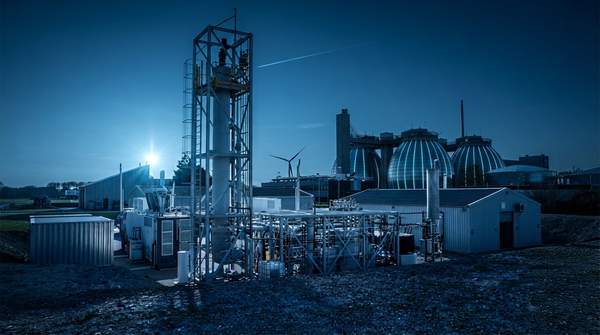
In Stockholm, Sweden, waste heat from data centers now warms 2,500 apartments. This innovative system captures energy typically lost, redirecting it to provide residential heating. Such cleantech innovation proves how tech's byproducts can integrate with urban infrastructure for community benefit.
Data centers are rapidly increasing global energy demand, but tech companies are simultaneously becoming the largest corporate purchasers and co-developers of clean energy solutions. This contradiction exposes the dual nature of tech's environmental footprint, even as investments grow.
Tech companies are effectively becoming major utility-scale energy developers, accelerating the global transition to renewable power while securing their own operational future. This strategy makes them critical players in reshaping regional energy grids.
The Scale of Tech's Green Energy Ambition
- 8 gigawatts (GW) — Google signed contracts in 2024 to purchase approximately 8 gigawatts of clean energy generation capacity, according to Datacenters.
- $40 billion — Google is investing more than $40 billion in Texas through 2027, according to Trellis.
These figures are not just large; they represent commitments on a scale rivaling national energy strategies. Google's aggressive clean energy push isn't about corporate social responsibility. It's about securing the foundational power for its own exponential growth, a direct response to data centers' surging global energy demand. This is a survival strategy, disguised as sustainability.
Beyond Purchases: Pioneering New Energy Models
| Metric | Approach | Impact |
|---|---|---|
| Computational Load Management | Shifting tasks to renewable availability | Optimizes existing clean energy use (Nature) |
| Xcel Energy Partnership | Co-created contract for almost 2 GW clean power | Develops new tariff structures for large-scale procurement (according to Trellis) |
| NV Energy Partnership | Co-developed Clean Transition Tariff for 115 MW geothermal | Funds new clean energy generation (according to Trellis) |
Attribution: Nature, Trellis
Tech giants aren't merely buying clean energy; they are actively co-developing new financial instruments and operational strategies. Google demonstrated flexibility by shifting computational tasks to times of day when solar and wind power are abundant, according to Nature. The company will pay for almost 2 gigawatts of clean power online through a contract structure co-created with Xcel Energy, according to Trellis. Google also co-developed the Clean Transition Tariff in Nevada with NV Energy to fund a 115-megawatt enhanced geothermal plant, according to Trellis. These actions don't just procure power; they fundamentally rewrite how renewable energy is generated and consumed, reshaping market dynamics.
Strategic Imperative: Securing Future Power
Google is paying $4.75 billion for Intersect, which develops data center energy infrastructure, according to Trellis. This acquisition marks a fundamental shift. Tech giants are no longer just energy consumers; they are becoming de facto energy infrastructure providers, blurring the lines between tech and utility sectors. This isn't just an investment; it's a declaration of energy independence.
Google, Intersect Power, and TPG Rise Climate will develop industrial parks with gigawatts of data center capacity in the U.S. according to Blog. These acquisitions and partnerships prove a strategic pivot where tech companies directly invest in and build their own energy infrastructure. This ensures a reliable, sustainable power supply for their rapidly expanding data center footprint, cementing their control over their own destiny.
The Future of Tech-Driven Energy Infrastructure
Tech companies are solidifying their role as de facto regional utilities, shaping energy grids for decades.
- Google's investment of over $40 billion in Texas through 2027, according to Trellis, confirms a long-term commitment beyond simple energy procurement.
- The development of industrial parks with gigawatts of data center capacity, co-located with clean energy projects, signals a deep integration into regional infrastructure, according to Blog.
The sheer scale of these investments and co-located developments means tech giants are not merely consumers but active developers of energy grids. This integration means future energy supply planning in key regions will increasingly involve tech companies as central stakeholders. They will influence infrastructure development and regulatory frameworks. This move ensures stable power for their expanding data center needs, while also accelerating the transition to renewable sources at an industrial scale. The implications for traditional utilities are profound: adapt or be eclipsed.
If current trends persist, tech giants like Google will likely become the dominant architects of future energy grids, fundamentally redefining the utility sector within the next decade.