
All Stories

How Real-Time Ray Tracing Works: Simulating Light at Interactive Speeds
Real-time ray tracing simulates light behavior for photorealistic images, made practical by specialized hardware. This process combines acceleration structures, dedicated RT Cores for efficient traversal, and AI denoising with Tensor Cores to achieve interactive speeds.

How RAG Pipelines Work: The Four Stages That Ground LLMs in External Knowledge
Retrieval-Augmented Generation (RAG) connects large language models to external knowledge bases through a four-stage pipeline: indexing, retrieval, augmentation, and generation. This process grounds LLM responses in current, domain-specific data, mitigating hallucinations and enhancing accuracy.

Analytical vs. Numerical Inverse Kinematics: The Trade-Off Every Industrial Robot Engineer Must Weigh
Inverse kinematics (IK) is crucial for industrial robots, translating desired end-effector poses into joint angles. The choice between analytical and numerical methods presents a fundamental trade-off between speed and precision versus generality and flexibility.

Resetting the Cell's Clock: How Partial Reprogramming Aims to Reverse Aging Without Causing Cancer
Cellular reprogramming offers a path to reverse aging by resetting the cell's epigenetic clock, restoring youthful gene expression. Partial reprogramming strategies, using genetic factors or small molecules, aim to achieve this rejuvenation safely without inducing cancer.

Rapid Growth Led One Brad Sugars Client to Rethink Structure and Leadership
Rapid growth can expose hidden management problems, forcing founders to adopt a "helicopter view" and focus on strengthening business structure and leadership. This transition involves working more deliberately on the business, clarifying roles, and developing people to handle increased operational complexity.

Healthleap Secures $38M to Expand AI Screening for Undiagnosed Hospital Conditions
Healthleap, an AI startup, has secured $38 million to expand its platform that scans patient records for undiagnosed hospital conditions. The investment will fuel the scaling of its AI workflow, which has demonstrated significant financial and clinical impact in over 50 hospitals, to cover more than 40 health conditions.

Why Microservices Need an API Gateway: Routing, Security, and the Shift from Monolith
An API gateway acts as the single entry point for microservices, routing client requests to the appropriate services and centralizing essential cross-cutting concerns like authentication and rate limiting. This simplifies client interactions and allows individual services to focus on core business logic, a crucial shift from monolithic architectures.

Beyond the Prototype: The Manufacturing Bottlenecks Halting Humanoid Robot Mass Production
The mass production of humanoid robots is currently hindered by significant manufacturing bottlenecks, particularly in producing high-precision components and ensuring adequate battery life. Overcoming these industrial and supply chain challenges is crucial for widespread deployment.

Beyond the Black Box: How Explainable AI Reveals the Strength of Green Concrete
Explainable AI (XAI) is revolutionizing green concrete design by accurately predicting material strength and revealing the underlying reasons for success or failure. This transparency empowers engineers to optimize sustainable concrete mixes with unprecedented confidence and efficiency.
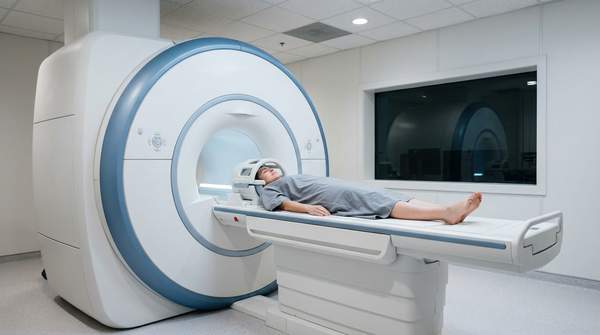
Self-Pay MRI and CT Scans: How to Get the Provider Order You Need
This article explains how self-pay patients can obtain a provider order for MRI and CT scans through a virtual review service like Diagnostic Orders Direct. It highlights the flexibility self-pay offers in choosing imaging facilities while emphasizing the necessity of a medical order.

Silicon Labs Unveils AI-Powered Platform to Automate Edge Device Development
Silicon Labs has launched an AI-powered platform designed to automate and simplify the development and scaling of intelligent edge devices. The new suite includes an AI SDK, automated hardware configuration tools, an open-source community, and enterprise integration.

How Patient-Derived Organoids Are Revolutionizing Personalized Medicine
Patient-derived organoids are revolutionizing personalized medicine by creating miniature, 3D models of human organs that mimic patient tissues. This technology accelerates drug discovery and tailors cancer treatments by predicting individual responses to therapies.

How Digital Twins Optimize Smart Manufacturing Processes
Digital twins are dynamic virtual replicas of physical manufacturing assets and processes, continuously updated with real-time data. This technology enables simulation, analysis, and optimization of operations, transforming predictive maintenance, quality control, and supply chain management.

The Key Pathways for Turning Captured CO2 into Valuable Products
Carbon Capture and Utilization (CCU) transforms captured CO2 into valuable products like fuels, chemicals, and building materials. This is achieved through distinct technological pathways: catalytic conversion, direct mineralization, and electrochemical reduction.

How BoKapsys Combines AI Bookkeeping, Budgeting and Financial Reporting
For modern businesses, managing finances effectively requires more than just balancing the books; it demands real-time visibility, accurate forecasting, and strategic insight. BoKapsys provides a solution by integrating …

How Quantum Machine Learning Redefines Data Processing
Quantum Machine Learning (QML) merges quantum computing with machine learning to address complex data problems, using quantum phenomena like superposition and entanglement for novel data processing. It offers theoretical advantages for specific high-complexity challenges, currently relying on hybrid quantum-classical models for near-term promise.

Agility and FORT Detail Multi-Layered Safety System for Digit 5 Humanoid Robot
Agility Robotics and FORT Robotics have partnered to develop an advanced, multi-layered safety system for the Digit 5 humanoid robot. This collaboration integrates onboard and offboard safety features to enable safe deployment in human-centric industrial environments.

CRISPR Diagnostics vs. RT-PCR: A New Era for Rapid Testing
CRISPR-based diagnostic platforms are emerging as faster, more accessible alternatives to RT-PCR, offering significant advantages in speed and portability for point-of-care and decentralized testing. This shift promises to revolutionize infectious disease response by enabling rapid nucleic acid detection outside traditional laboratories.

Beyond the Buzz: How Advanced Haptics Simulate Realistic Touch in VR
Advanced haptic technologies are enabling more realistic touch simulation in VR/AR, moving beyond simple vibrations to convey texture and temperature, though significant challenges remain for widespread adoption.

Asset Manager Pro Gives Operators a Focused Assigned-Asset Workflow
For Australian contractors operating in remote regions like the Pilbara or Bowen Basin, reliable connectivity is a luxury, not a guarantee. Asset Manager Pro addresses this challenge head-on, providing offline-first pre-…

How Organs-on-Chips Recreate Human Biology for Safer Drugs
Organ-on-a-chip technology recreates human organ functions on a micro-scale using living cells and microfluidics. This platform offers a more accurate and ethical alternative for drug discovery and personalized medicine compared to traditional models.

CATAGEN Secures UK Government Guarantee to Unlock Sustainable Aviation Fuel Financing
Belfast-based CATAGEN has secured commercial funding for its sustainable aviation fuel technology, backed by a UK Export Finance (UKEF) loan guarantee. This crucial government backing aims to de-risk private investment and address the significant financial barriers hindering the growth of the UK's domestic SAF industry.

A Practical Guide to Early vs. Late Sensor Fusion Architectures
Choosing between early and late sensor fusion architectures is a critical design decision for autonomous systems, impacting perceptual accuracy, computational load, and system robustness. This guide explores the trade-offs of each approach and provides a decision matrix for engineers.

Neuromorphic vs. Von Neumann: Selecting the Right Architecture for Edge AI
Engineers selecting edge AI architectures must choose between traditional Von Neumann and brain-inspired neuromorphic systems, balancing the Von Neumann bottleneck against neuromorphic efficiency for power and performance.